Not everyone needs surgery.
If your hair is thinning rather than gone, the right first step is often to strengthen what you have, not a transplant. We offer a clear range of treatments, from simple maintenance to advanced regenerative therapy, and we'll tell you honestly which you need.
Our non-surgical hair loss programme is delivered under the Signature Hair Growth Treatment™ name — available in four levels depending on your hair loss stage and treatment goals.
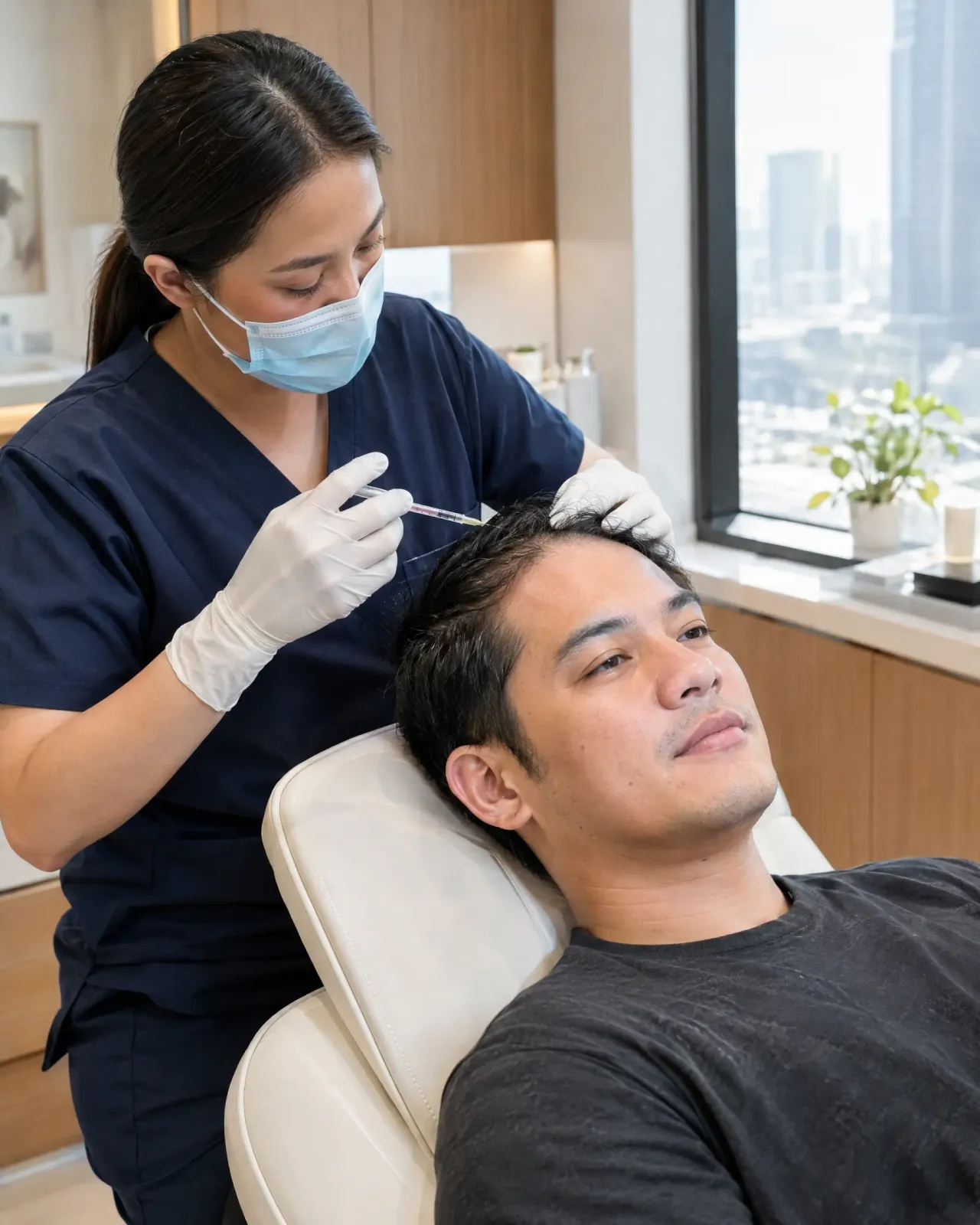
An honest look at where you stand · No pressure
Worth being clear about, before anything else.
Non-surgical treatments slow loss and strengthen the hair that is still active, and used at the right time they make a visible difference. They cannot regrow hair where an area is fully bald.
Once a follicle is gone, only a transplant replaces it. So the first question is what suits your stage of loss: for earlier thinning these treatments are often the answer; for advanced loss they work best alongside surgery.
A clear ladder, from foundation to advanced.
Three of these share the same protocol, so you can see exactly what each step up adds.
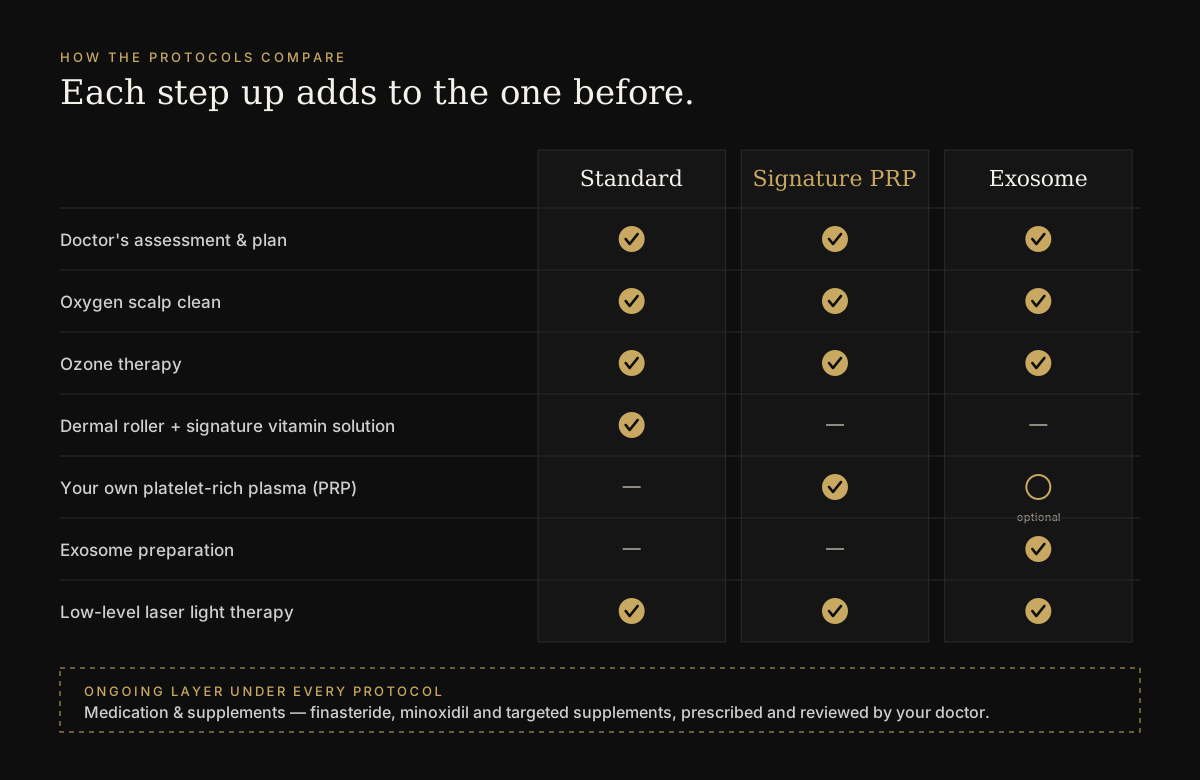
Our foundational treatment: a multi-step scalp and hair therapy that cleans, stimulates and nourishes the scalp to strengthen and support thinning hair — the full protocol, without PRP. The sensible first step for someone beginning to address hair loss, or maintaining the hair they have.

- What it is. A single session moves through several steps, each doing a specific job: a doctor's assessment of your hair and scalp; an oxygen-based scalp clean to clear sebum and build-up and prepare the surface; ozone therapy to cleanse and refresh the scalp; a dermal roller applied with our own signature solution of biotin, vitamins and minerals; and low-level laser light therapy to finish. It is the same protocol as our Signature PRP, with the PRP removed.
- The science. The value is in combination, not any single step. Cleaning and preparing the scalp improves the environment the follicle has to work in. The dermal roller creates controlled micro-channels in the skin — this lets the nutrient solution reach the level of the follicle rather than sitting on the surface, and the micro-injury itself prompts a mild local healing response. The biotin, vitamin and mineral solution supplies the scalp and follicles with the substrate healthy hair is built from. Low-level laser light therapy — photobiomodulation — uses specific wavelengths of light to stimulate activity in the follicle; the reasoning is sound and it is most useful in earlier, active loss.
- Who it is for. Earlier-stage thinning, where the follicles are still active and worth supporting. Someone who wants to start looking after their hair before considering anything more involved. And as ongoing maintenance, including between other treatments.
- How soon, honestly. This is a course, not a single visit. The first thing most people notice is the condition of the scalp and the feel and quality of the hair, over the first weeks to a couple of months. Any effect on density is gradual and builds with a consistent course; it is maintained by continuing, not by stopping after one session. Your doctor sets the schedule to your case.
- The honest limit. It strengthens and supports the hair you still have. It does not bring back a follicle that is already gone.
Where this is the right starting point, the doctor will say so — and where it is not enough on its own, will tell you what is.
A complete multi-step protocol built around your own platelet-rich plasma — not a single injection. It strengthens thinning hair and supports the follicles you still have, and it is our signature non-surgical treatment for active, earlier-stage loss.
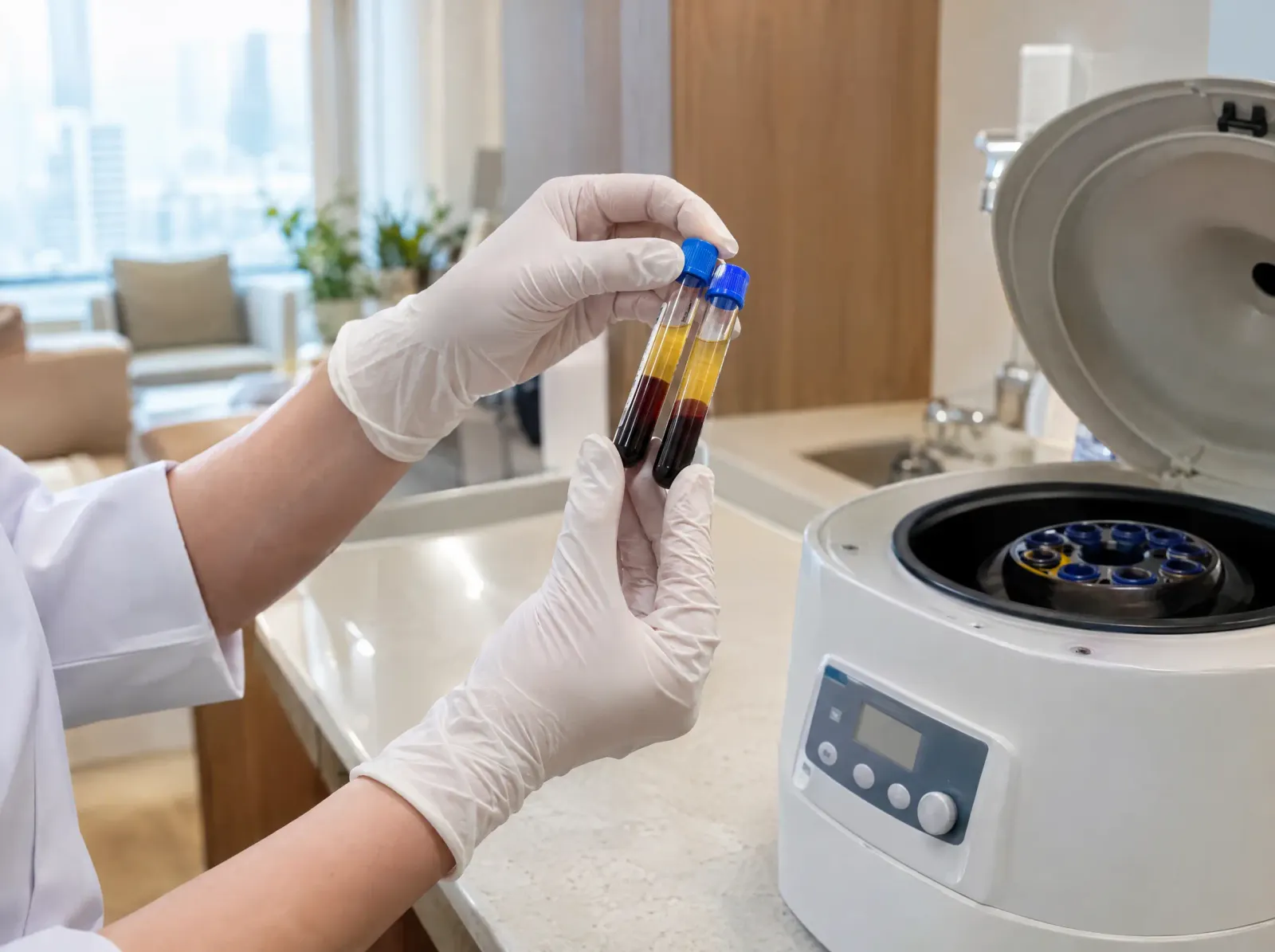
- What it is. The Standard protocol, with PRP at its centre: a doctor's assessment and plan; an oxygen scalp clean; ozone therapy; your own platelet-rich plasma — drawn from a small sample of your blood, concentrated, and returned to the scalp — worked in with a dermal roller or micro-needling so it reaches the follicle (whether micro-needling is used depends on your case); and low-level laser light therapy to finish. It is a full protocol designed to get more from the PRP than an injection alone would.
- The science. Platelet-rich plasma concentrates the platelets from your own blood. Platelets carry growth factors — the signalling proteins the body uses in healing and tissue maintenance. Delivered into the scalp, the reasoning is that these growth factors support the follicle environment, help sustain follicles that are miniaturising under hereditary loss, and encourage them to stay in the active growth phase longer. The micro-needling step adds a controlled regenerative signal of its own and improves delivery. Because the plasma is your own, nothing foreign is introduced. The evidence for PRP in this kind of thinning is reasonable, and it is best understood as reinforcement of existing hair rather than the creation of new.
- Who it is for. Thinning or miniaturising hair where the follicles are still alive and worth strengthening. Someone who wants more than the Standard treatment offers. It also works well alongside medical management, and around a hair transplant, to support the environment the hair is growing in.
- How soon, honestly. A course over time — typically an initial series followed by maintenance. The earliest change is usually less shedding, often within the first months; improvement in thickness and quality is gradual and tends to show over roughly three to six months. The result is held by continuing on the schedule your doctor sets — it is maintenance, and it fades if treatment stops.
- The honest limit. PRP reinforces the hair you have. It does not regrow hair that has been lost, and it is not a substitute for a transplant where the follicle is already gone.
The doctor sets the right course and rhythm for your hair, rather than selling a fixed package.
An advanced regenerative option for those who want to go beyond PRP — and for supporting a weaker donor area or getting the most from a transplant. It follows the same protocol structure, with an exosome treatment in place of or alongside the PRP, and is offered as a course of three.
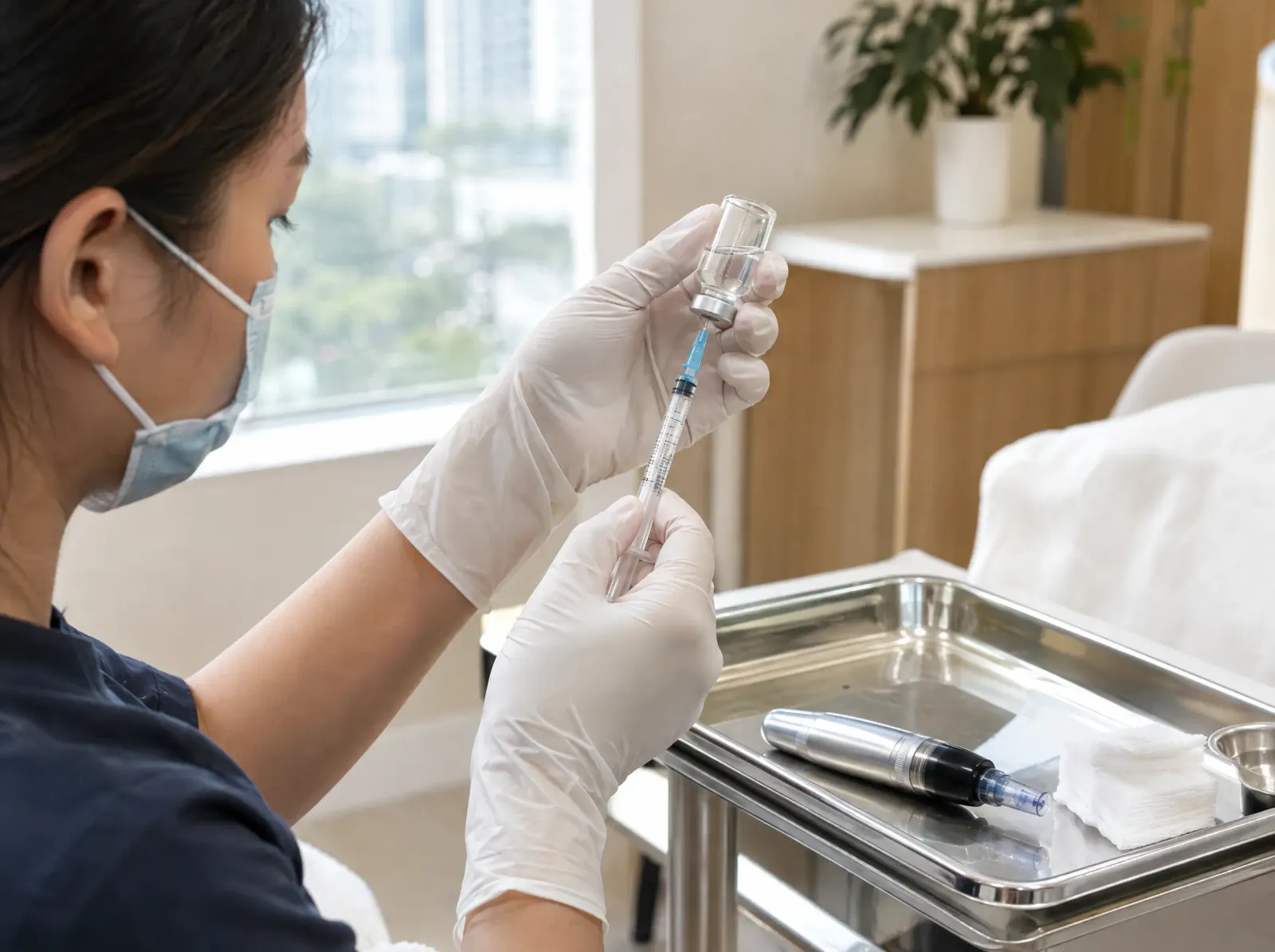
- What it is. The same protocol structure as Signature PRP — scalp preparation, the treatment itself, laser to finish — with an exosome preparation used in place of, or together with, the PRP. Offered as a course of three sessions.
- The science. Exosomes are tiny vesicles that cells use to communicate with one another, carrying growth factors and other signalling molecules from one cell to the next — in effect a packaged set of instructions. In hair treatment, exosome preparations are applied to deliver a concentrated dose of these signals to the scalp, with the aim of supporting the follicle environment and the hair growth cycle more strongly than PRP alone. The biological rationale is genuine.
- An honest word on the evidence. Exosome therapy is promising and increasingly sought after, but it is an emerging treatment. The evidence base is younger and smaller than for PRP or medication, and the preparations are not yet as standardised or as fully regulated. We offer it because the reasoning is sound and patients value it — but we give a realistic view of what to expect, not an overstated one.
- Who it is for. Someone who wants a stronger non-surgical option than PRP on its own. A weaker donor area that benefits from extra support. And around a hair transplant, to give the grafts the best possible environment to settle into. It is genuinely optional — your choice, made with our honest opinion rather than a push.
- How soon, honestly. Offered as a course of three, with gradual rather than sudden change, and the same maintenance logic as the other treatments. We set realistic expectations before you commit.
- The honest limit. As with everything on this page, it supports and strengthens — it is not a regrowth promise, and the science is still maturing.
Whether exosome therapy is right for you is genuinely your decision; the doctor's job is an honest opinion, not a sale.
For many people the foundation of long-term hair maintenance is medical — doctor-prescribed treatments and supplements that slow loss and support the hair over time. Used consistently, they are often the quiet backbone that protects the results of everything else, including a transplant.

- What it is. A long-term, doctor-guided approach, matched to your case. Depending on what is driving your loss, it may include finasteride, minoxidil, and targeted supplements — prescribed, supervised, and reviewed over time, not chosen off a shelf.
- Finasteride — the science. Hereditary hair loss in men is driven largely by DHT, a hormone that gradually shrinks genetically susceptible follicles. Finasteride reduces the amount of DHT the body produces, which can slow or halt that process and, in many men, helps hold the hair they have. It is a prescription medication, taken continuously to maintain its effect, and it carries considerations we discuss with you properly at consultation before anyone starts it.
- Minoxidil — the science. Taken as a tablet (2.5 mg or 5 mg, prescribed by your doctor), it supports the hair growth cycle — it appears to extend the active growth phase and improve blood flow around the follicle. It needs continuous use: the benefit holds while you use it and gradually fades if you stop.
- Supplements. Vitamins and minerals that support hair and scalp health, and that address deficiencies — iron and others — which can themselves drive shedding. Matched to what your assessment shows, not given as a blanket sell.
- Who it is for. Hereditary, pattern loss — particularly men, in the case of finasteride. Anyone who needs a long-term foundation to hold their hair. And anyone protecting the result of a transplant, where ongoing medical management often makes the difference over the years.
- How soon, honestly. These work over months, not days, by slowing loss and holding ground rather than by sudden regrowth. Benefit typically becomes apparent over three to six months of consistent use, and it depends on staying with it — the gains reverse if treatment stops.
- The honest framing. These are medical treatments, prescribed and supervised by the doctor and reviewed over time — not products bought off a shelf. The continuous-use reality, and finasteride's considerations in particular, are things we talk through with you honestly before you begin.
The right combination — if any — comes out of the assessment, matched to your hair and reviewed as it changes.
The honest answer depends on your hair — not on a package.
The right choice depends on your stage of loss, your scalp, the cause and your goals. Earlier thinning often responds to Standard or Signature PRP; exosome suits those wanting more, or supporting a transplant.
Medical management helps almost everyone long-term. We'd rather tell you honestly what will help — even if that's a transplant, or very little at all — than sell you a package.
Not sure where you stand?
Start with an honest look at your hair.
Send a few photos for a personalised assessment, and we will give you a straight view of where you stand and which treatment — if any — actually makes sense for you. No pressure, and no packages pushed.
Considering surgery instead? See hair transplants for men → · for women →