Thinning hair is more common than you think — and more treatable.
Many women quietly live with thinning hair, a widening part, or a hairline that has crept back, believing nothing can be done. Often, something can. The first step is simply understanding what is happening — and what your options actually are.
60 seconds · An estimate based on your hair loss stage · Not a medical diagnosis.
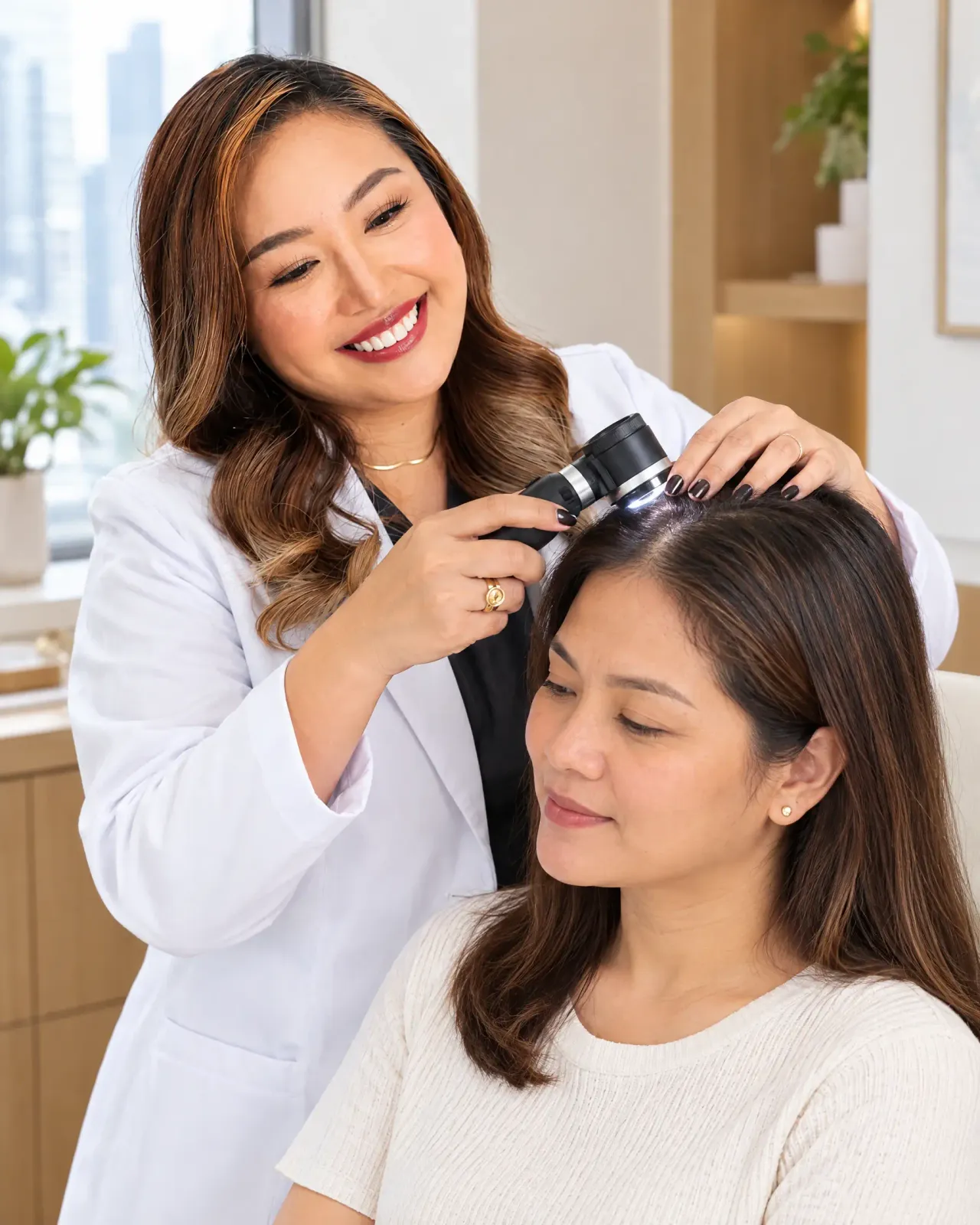
Female hair loss looks different.
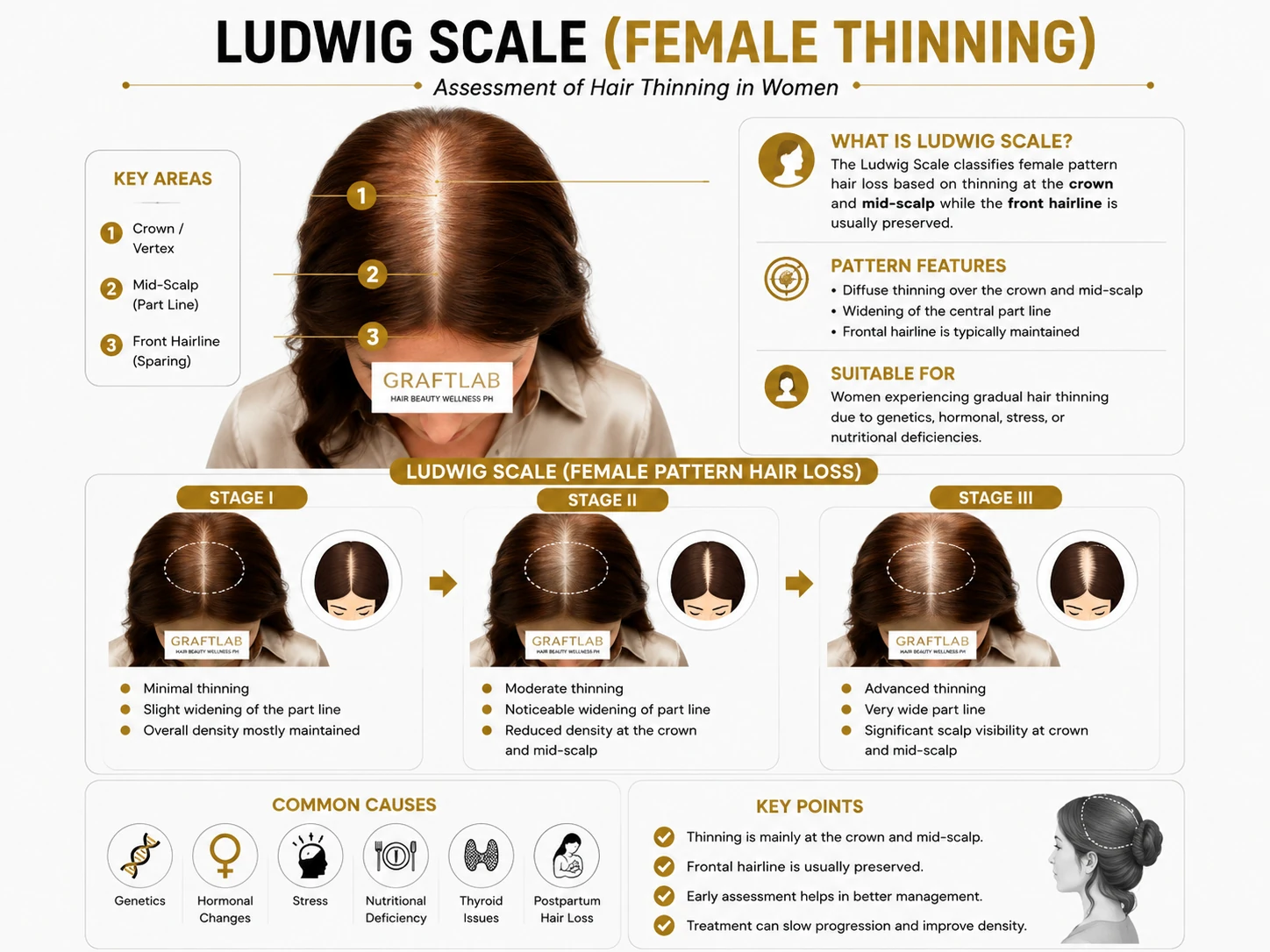
Female hair loss rarely looks like the male pattern. Most women keep their hairline but notice a wider part, finer hair on top, or more hair in the brush — a diffuse thinning rather than a receding line.
It is mapped on the Ludwig scale, and it has many possible causes — hormones, genetics, thyroid, stress, pregnancy, medication. The cause matters, because it shapes the right treatment.
It is far more common than most women realise. The first step is not choosing a procedure, but understanding what is happening.
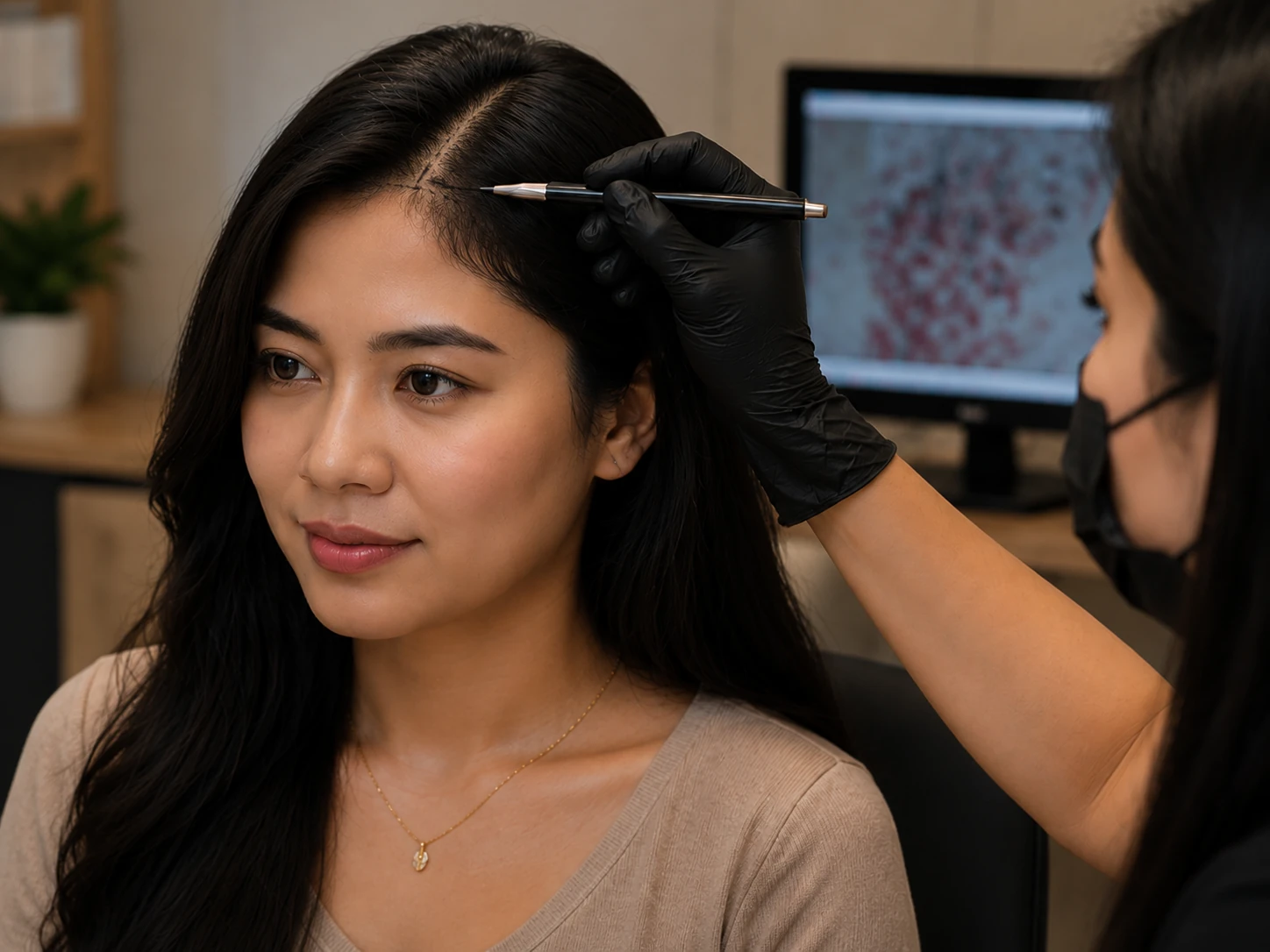
Surgery is not always the answer — and we will tell you.
A transplant moves healthy follicles from a stable donor area to where they are needed. It works very well for many women — a high hairline, a widened part, a defined thinning zone — but not every woman is a candidate.
If thinning has reached the donor area, moving that hair just moves the problem. And if hormones, health or nutrition are driving the loss, that should be treated first — sometimes it resolves without surgery.
So we assess your hair, your donor area and the likely cause, and if a transplant isn't right, we will say so and point you to what is.
What we treat.

The most common reason women come to us: a part-line that has widened and a top that feels finer and less dense, while the hairline itself stays where it was. Where the donor area at the back is still strong, transplanted hair can rebuild density through the thinned zones — worked in among the hair you still have. Where it is not, surgery is the wrong answer, and we will tell you so.
Female thinning rarely behaves like the male pattern. The hairline is usually preserved; the loss shows as a widening part, a finer feel on top, and more hair than usual on the pillow and in the brush. It is diffuse — spread across the top rather than retreating along a line — and that single fact changes both who is a candidate and how the work is done.
- The pattern is diffuse, not a receding line. Mapped on the Ludwig scale rather than Norwood, female loss thins the area behind a preserved frontal hairline. The goal is not to build a new front; it is to return density to a zone that still has hair in it.
- Donor stability decides everything. A transplant only works if the hair being moved is permanent. In some women the thinning reaches into the donor area at the back itself — the hair there is also miniaturising. Moving follicles from an unstable donor simply relocates the problem, and the transplanted hair thins in turn. Assessing the donor properly — its density, the calibre of the hair, whether it is genuinely stable — is the single most important judgement in a woman's case.
- Working among the hair you still have. Because your own follicles are present throughout the area, grafts are placed between and around them, not into bare scalp. Done without care, native hairs are damaged in the process. It calls for fine instruments, high magnification, and graft placement angled to match the hair already growing there.
- The cause has to be understood first. Thinning in women is driven by many things — genetic female pattern loss, but also thyroid imbalance, low iron, hormonal shifts, pregnancy, stress, certain medications. Some resolve when the cause is treated, with no surgery at all.
- A realistic view of density. Where you are a good candidate, the result is a genuine return of fullness to the thinned areas, blended into your existing hair so it reads as your own. It is restored density, planned against a finite donor supply — not uniform, wall-to-wall coverage.
- Sometimes the right first step is not surgery. For many women, strengthening and holding the hair you still have — medically, or non-surgically — is the better place to start, before or instead of a transplant.
A real patient result
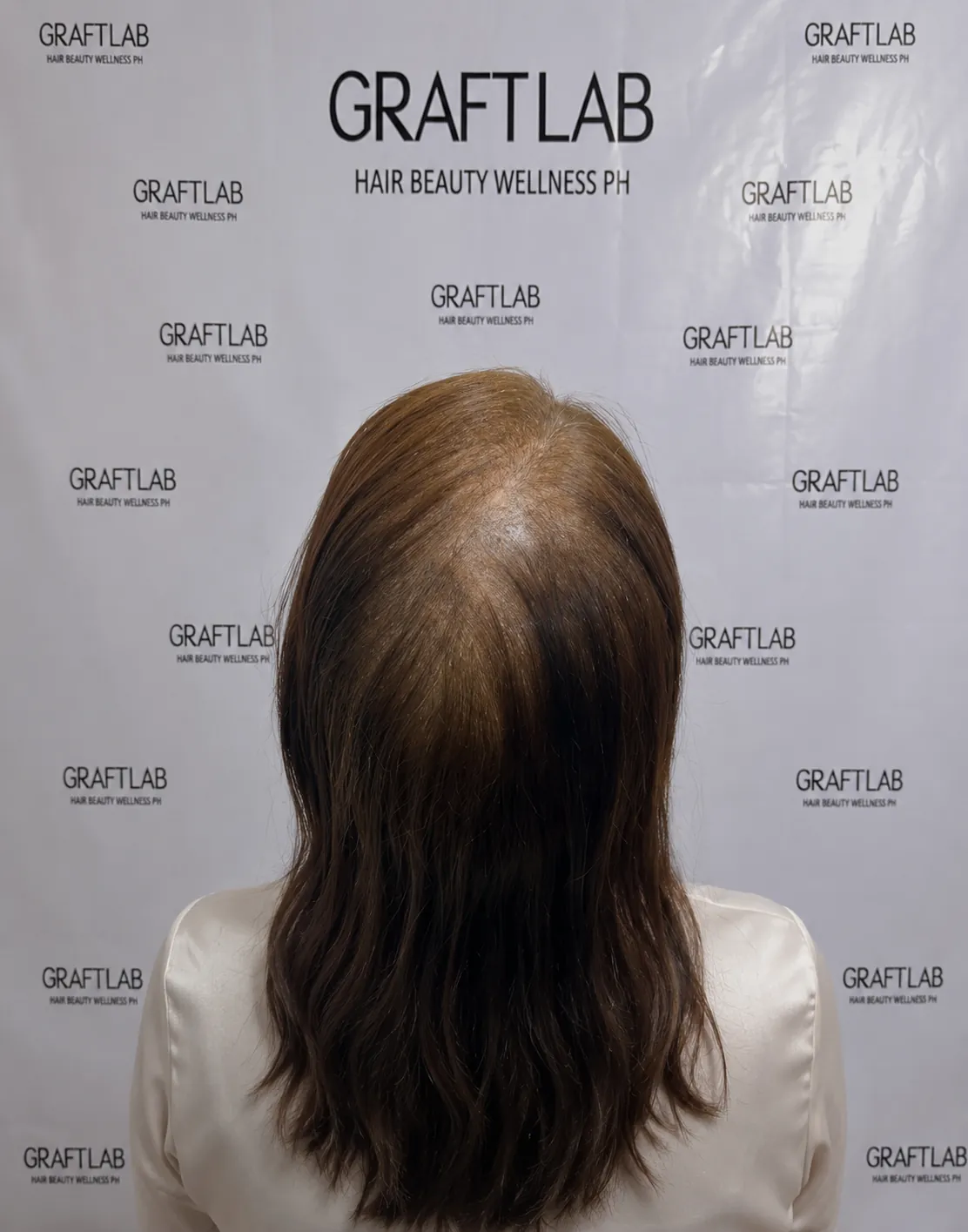
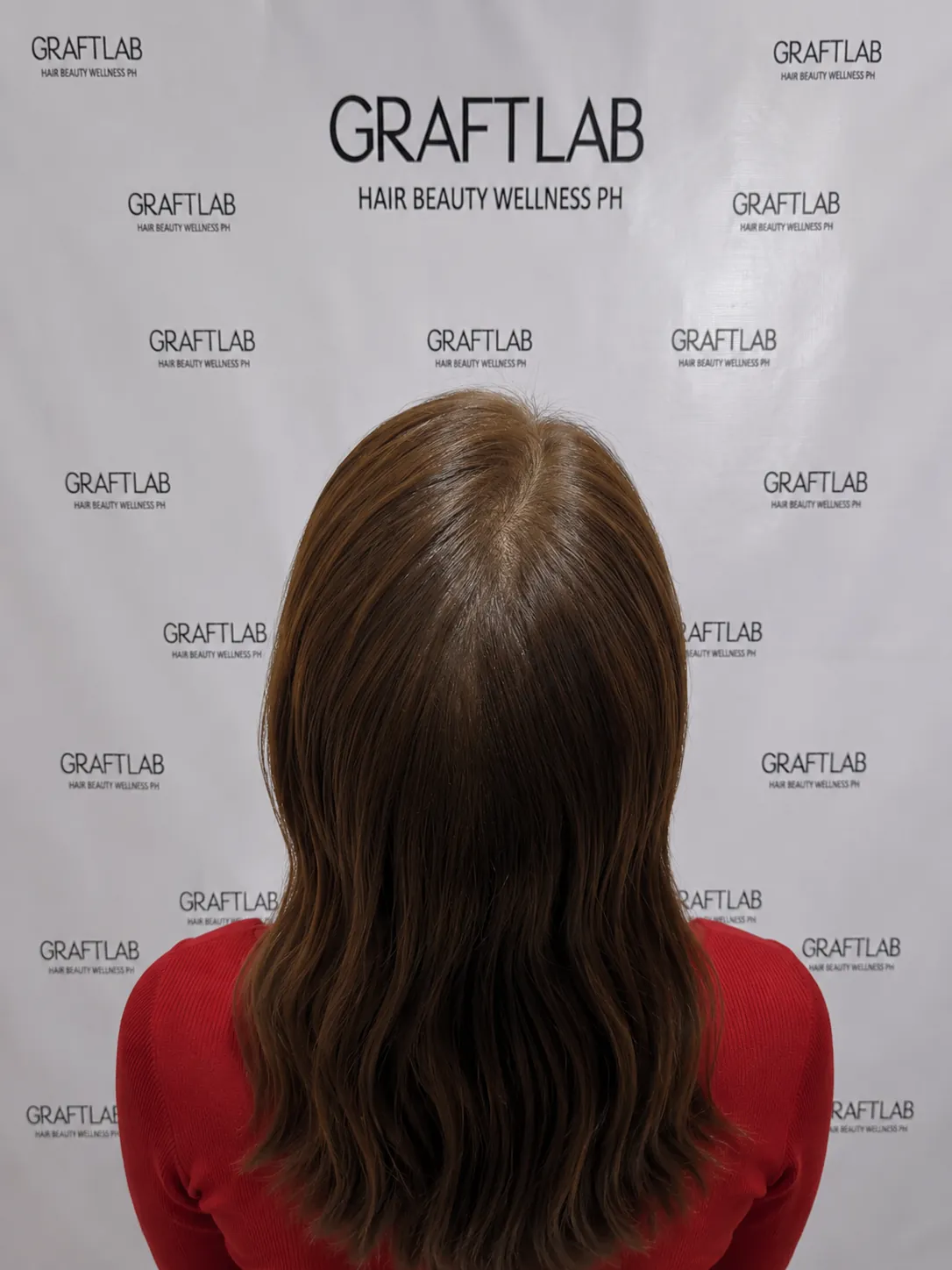
Density work for women is carried out under our Signature 360° Micro FUE™ protocol, built around placing grafts safely among the hair you already have. See how the method works →
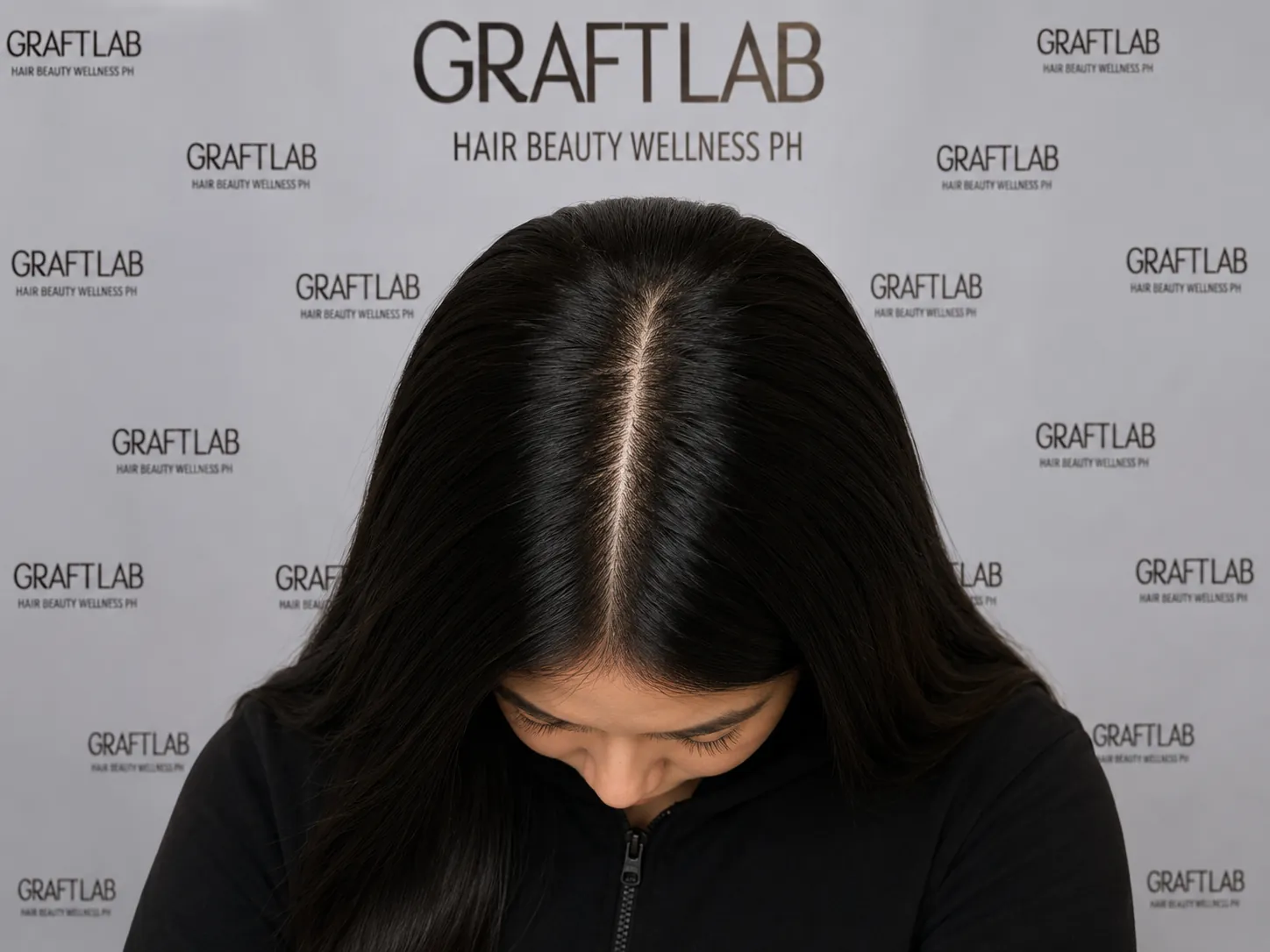
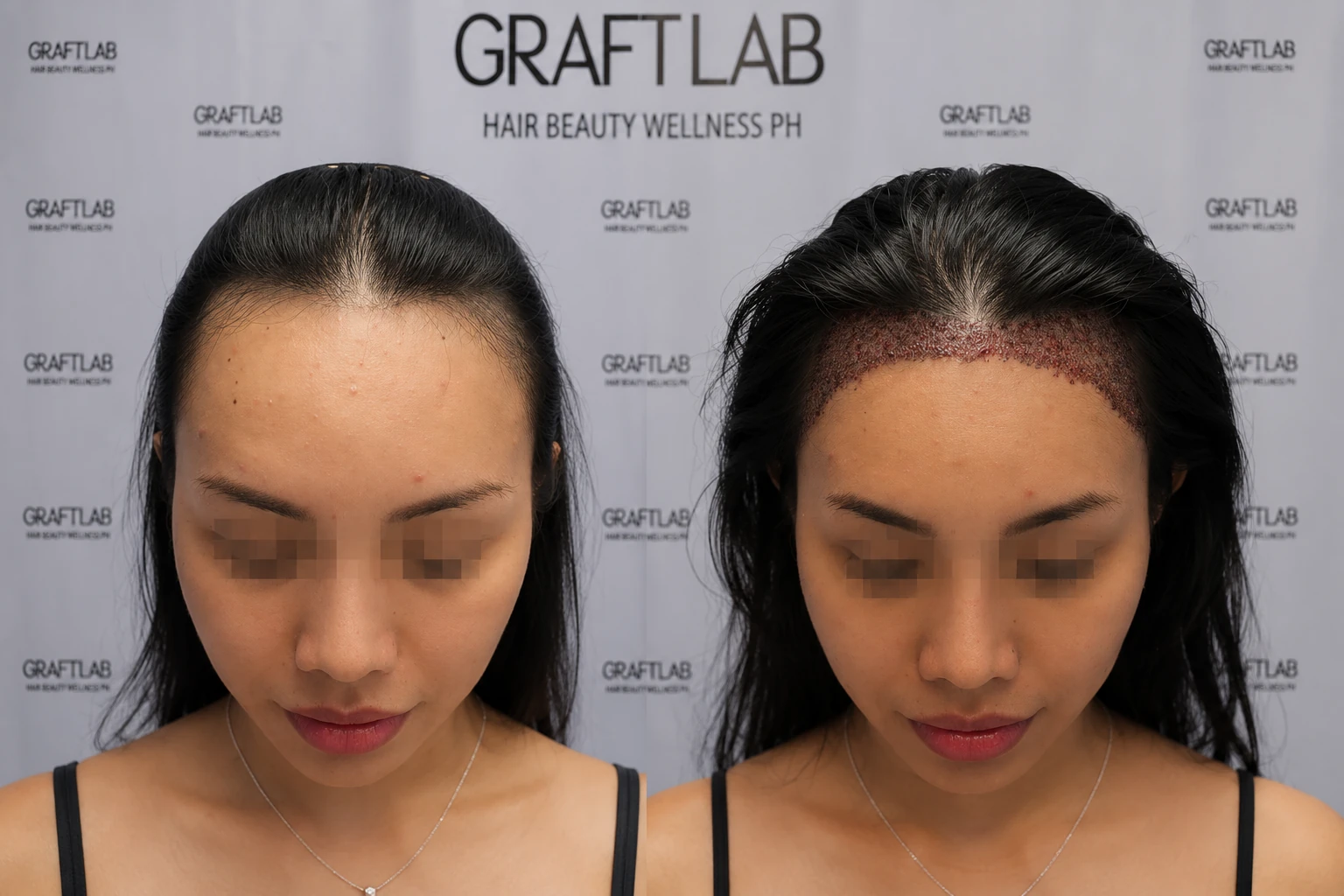
For a naturally high hairline or a forehead that feels too large, the hairline can be brought forward and reshaped with transplanted hair, softening the proportions of the face. It also restores a hairline that has crept back, often at the temples. The donor area in these women is usually unaffected, which makes this one of the more dependable procedures we do.
Two different women arrive at this procedure. One has always had a high hairline or a forehead she feels sits out of proportion with her face — no loss, simply where the hairline was set. The other has watched the hairline recede over time, frequently at the temples, sometimes from years of tight hairstyles. In both, transplanted hair can lower and reshape the line — but the design is everything, and the design is the surgeon's work.
- A female hairline is designed differently. It is set lower than a man's, shaped with a softer, more rounded contour, and carries none of the temple recession that is natural in men. Getting that geometry right for your particular face is what separates a hairline that looks like yours from one that looks placed.
- The front row is built from single hairs. The leading edge is constructed from individual follicular units — the finest hairs in your donor area — set at low, forward-leaning angles in a deliberately irregular line. That soft, slightly uneven front is what lets the hairline fade in rather than start as an abrupt wall.
- It is the surgeon's design, agreed with you first. The line is mapped and discussed with you before anything begins; the surgeon then creates each recipient site at the planned angle, direction and depth, and the trained team places the grafts into those sites under supervision — or, with implanter pens, the surgeon implants them.
- Usually a strong candidacy. Unlike diffuse thinning, the women suited to hairline lowering typically have an unaffected, stable donor area. That makes the outcome more predictable, and the change to the balance of the face can be quietly significant for a relatively contained amount of work.
- Temple and traction loss. Recession at the temples, including loss driven by years of tension from tight ponytails, braids or extensions, can often be rebuilt — provided the follicles in the area are still viable. Where tension is the cause, we will be honest about protecting what remains.
A real patient result
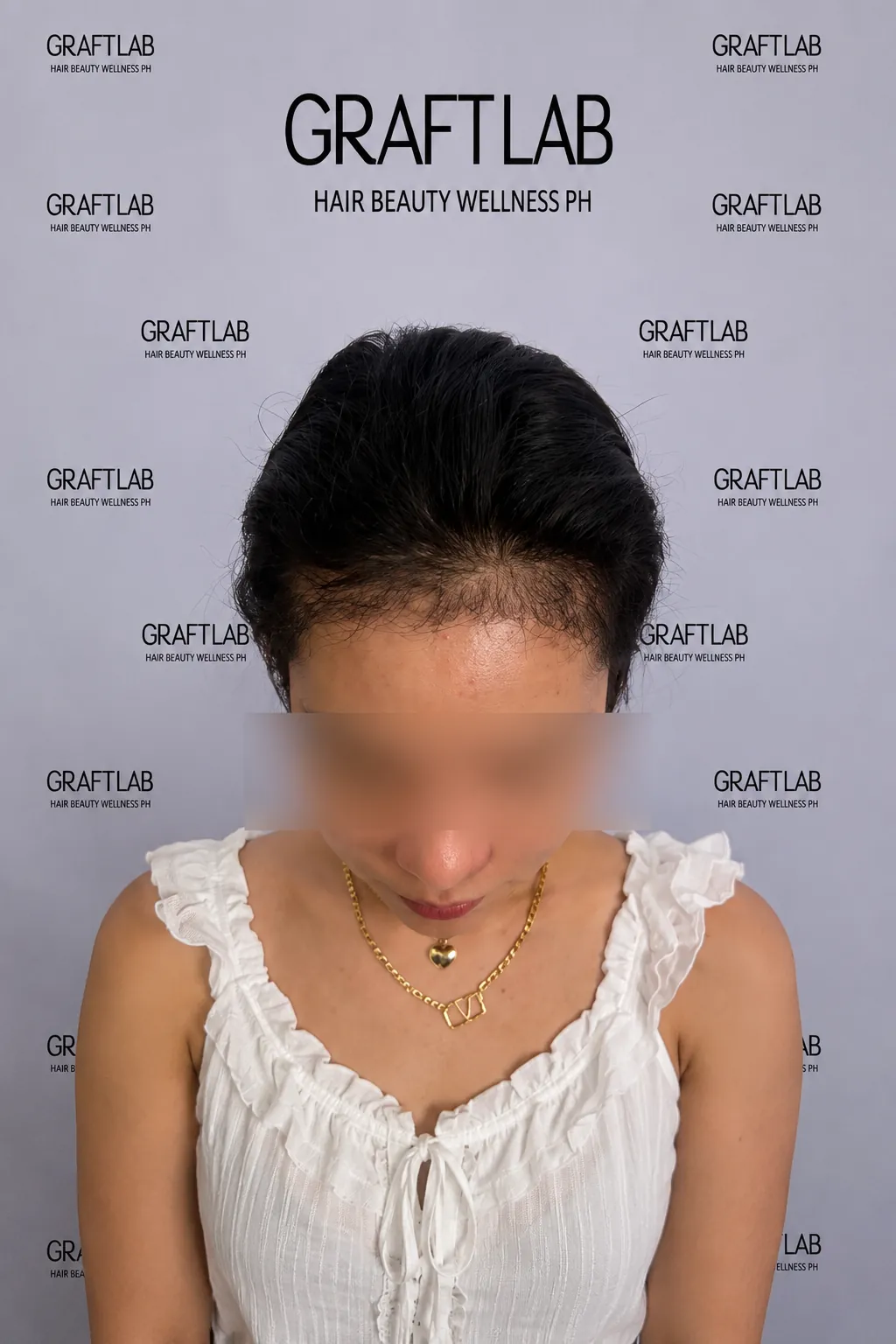
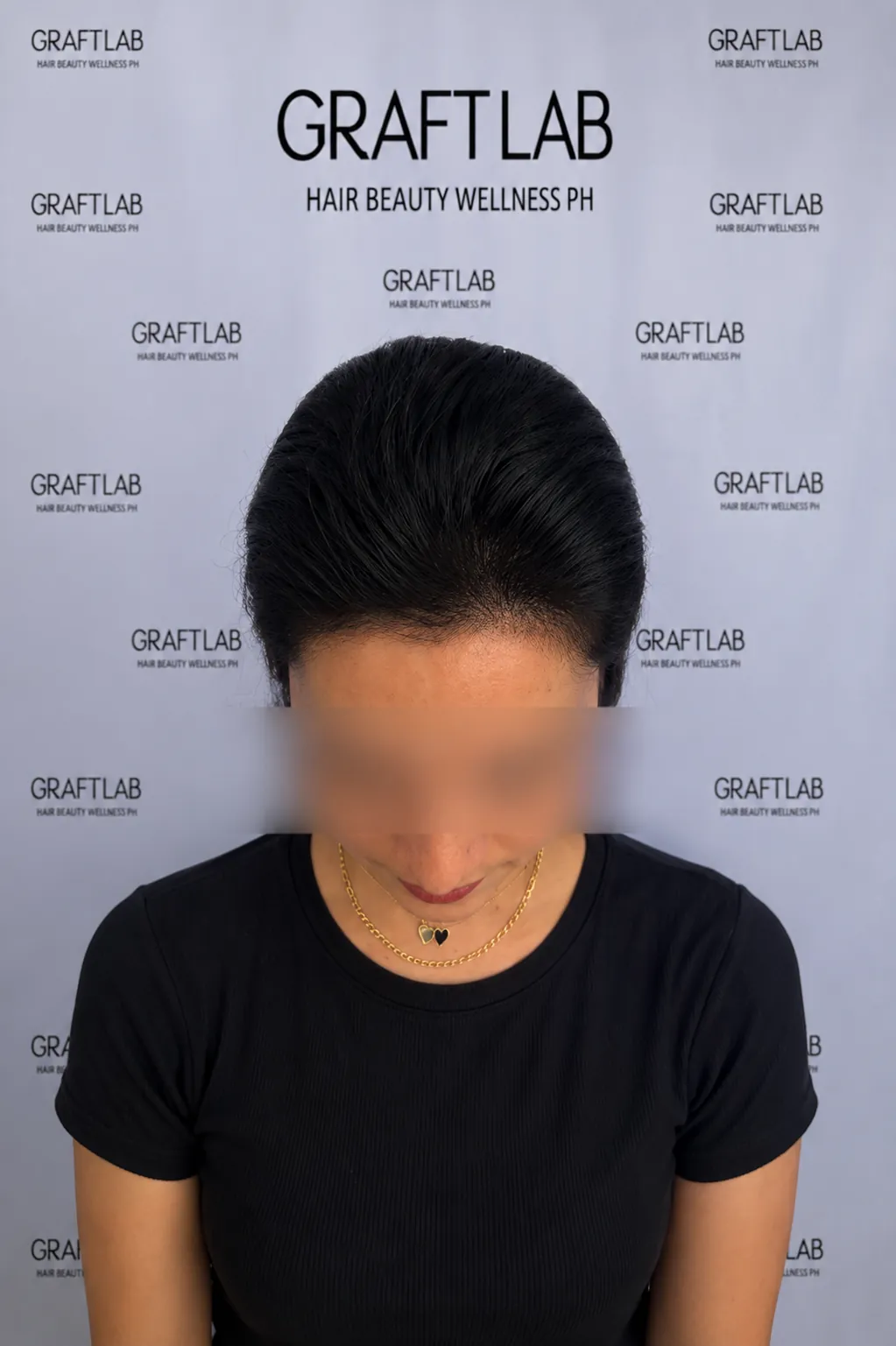
Hairline design and lowering is performed under our Signature 360° Micro FUE™ protocol — the surgeon designs the line and creates each site; the trained team places the grafts under supervision, or the surgeon implants them with implanter pens. See how the method works →
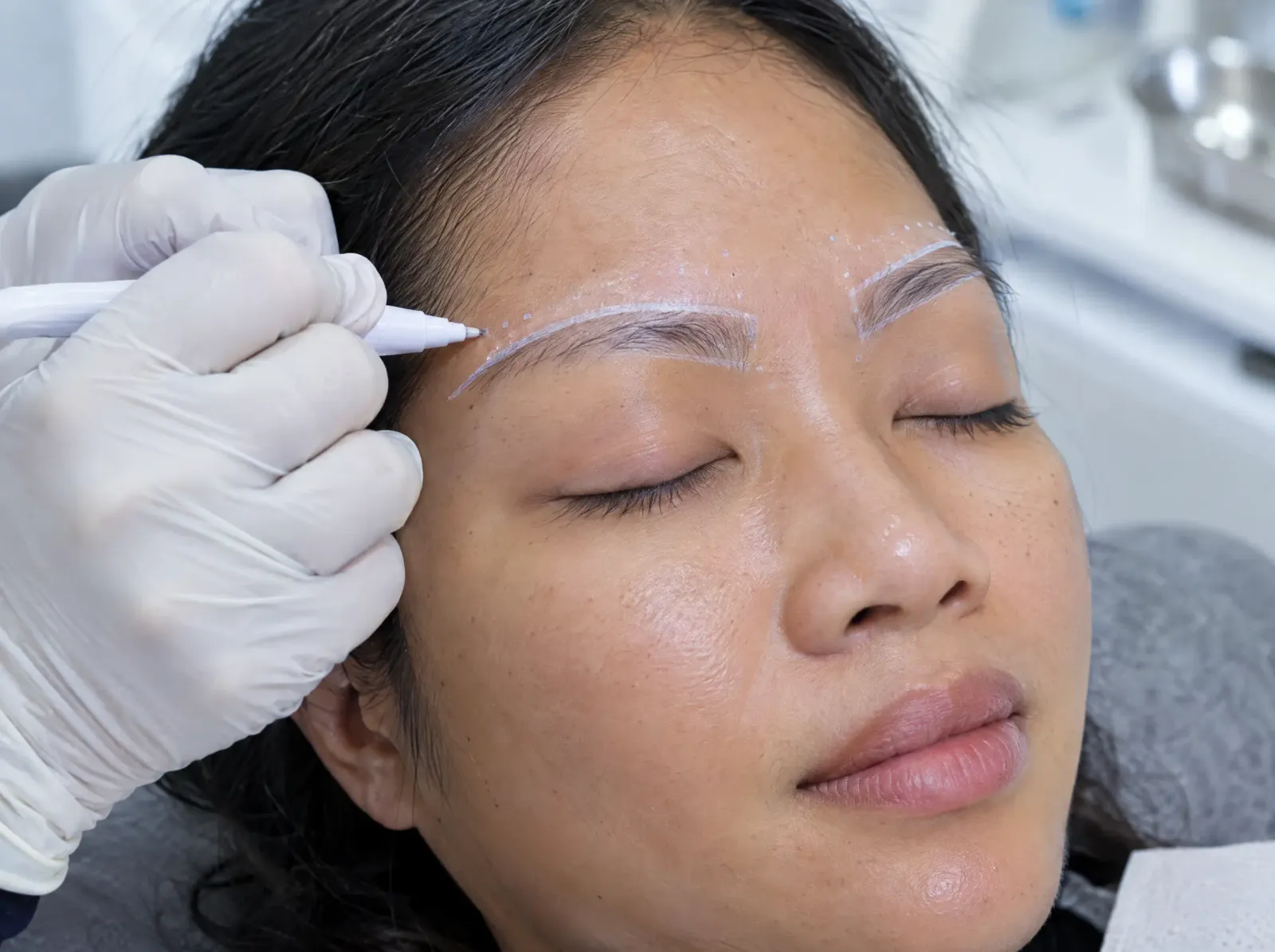
Eyebrows thinned by years of plucking, by scarring, by a medical cause, or simply by age can be rebuilt with transplanted hair — a natural, permanent brow you groom like your own. It is among the most exacting work we do, because brow hair grows in a way that has to be reproduced almost exactly.
Brows thin for many reasons: decades of plucking and tweezing that eventually stopped growing back, scarring, medical causes, or the gradual loss that comes with age. They are restored by transplanting individual hairs from the scalp into the brow, rebuilding both shape and density. What makes brow work difficult is not the moving of hair — it is the precision the brow demands.
- Why brows thin. Chronic over-plucking damages the follicle until it no longer regrows; scars, thyroid and other medical conditions, and age all play a part. Some women come to us after microblading or tattooing has faded or no longer satisfies them, looking for something that is actually their own hair.
- Angle is everything. Brow hairs grow almost flat against the skin, at a far sharper angle than scalp hair, and their direction changes continuously across the brow — sweeping upward at the head, flattening along the arch, angling down toward the tail. Each graft has to be placed to follow that map, or the brow reads as wrong.
- Single hairs, placed one at a time. A natural brow is built only from single-follicle grafts, which is why it is slow, meticulous work. Density is judged conservatively, and a second light pass is sometimes the right way to reach the final result.
- It grows like scalp hair — because it is. The transplanted hairs keep the growth behaviour of the scalp they came from: a permanent brow that does not wash off or fade, and one that needs occasional trimming and grooming. We tell you this in advance, because it is part of living with the result.
- Designed to your face. Shape, symmetry and arch are mapped to suit your features and agreed with you before anything begins. The surgeon designs the brow and creates each site; placement follows that design, by the trained team under supervision or by the surgeon with implanter pens.
Eyebrow restoration is carried out under our Signature 360° Micro FUE™ protocol, where single-hair precision and angle are the whole task. See how the method works →
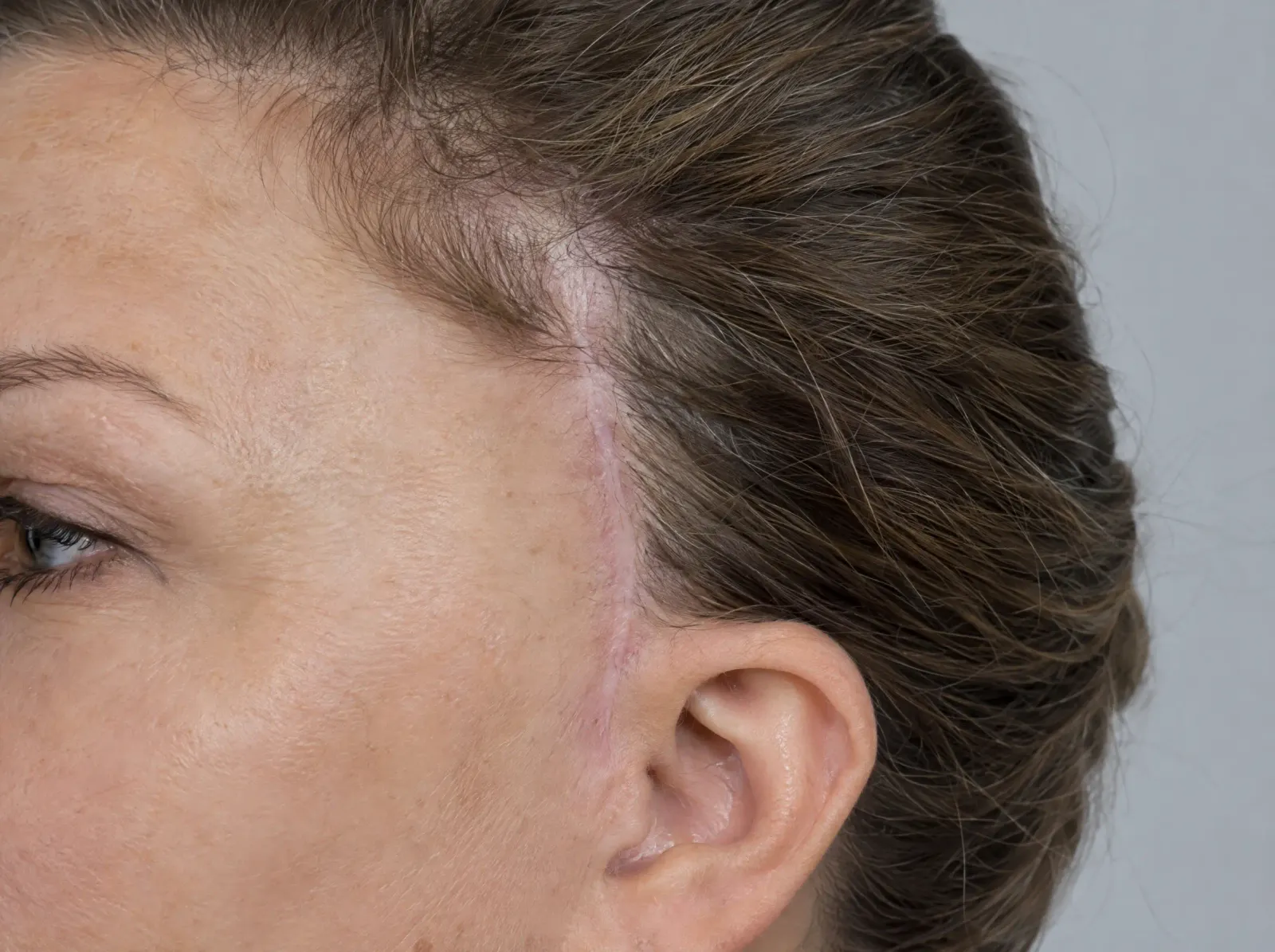
Hair can be transplanted into scars on the scalp, hairline or brow — from a facelift or brow-lift, an old injury, surgery, or a cosmetic procedure — to soften and disguise them. The honest caveat that applies to all scar work applies here: scar tissue behaves differently from healthy scalp, so we approach it carefully and tell you what is realistic for your particular scar.
Scars along the hairline or across the scalp can be camouflaged by transplanting hair into and around them, blending the area back into the surrounding hair. It is frequently done alongside a hairline procedure, and sometimes on its own. What matters most is being honest about how scar tissue accepts grafts.
- What it treats. The scars women most often ask about sit at the hairline or temples — from a facelift or brow-lift, an old injury, previous surgery, or cosmetic procedures. Burn and other scalp scars can be approached the same way.
- The blood-supply consideration. Scar tissue carries a poorer blood supply than healthy scalp, and grafts depend on that supply to survive. Graft survival within a scar can therefore be lower than in normal tissue, and the area is best approached with that built into the plan.
- A conservative, sometimes staged approach. We often work at a lower density on a first pass to confirm how the tissue accepts grafts, treat in stages where wiser, and occasionally condition the tissue beforehand to improve the bed. The angle and depth of each site are adjusted for the altered, often tighter tissue.
- A realistic goal. The aim is to soften and disguise the scar so it is no longer obvious — camouflage, rather than complete erasure.
- Alongside a hairline, or on its own. Scar work for women is often combined with hairline lowering or reshaping, and is equally done as a standalone. Before you decide, we look at your particular scar and tell you honestly what degree of improvement is achievable.
Scar work is performed under our Signature 360° Micro FUE™ protocol, with the angle and density judged to the tissue. See how the method works →
No one needs to know — including during recovery.
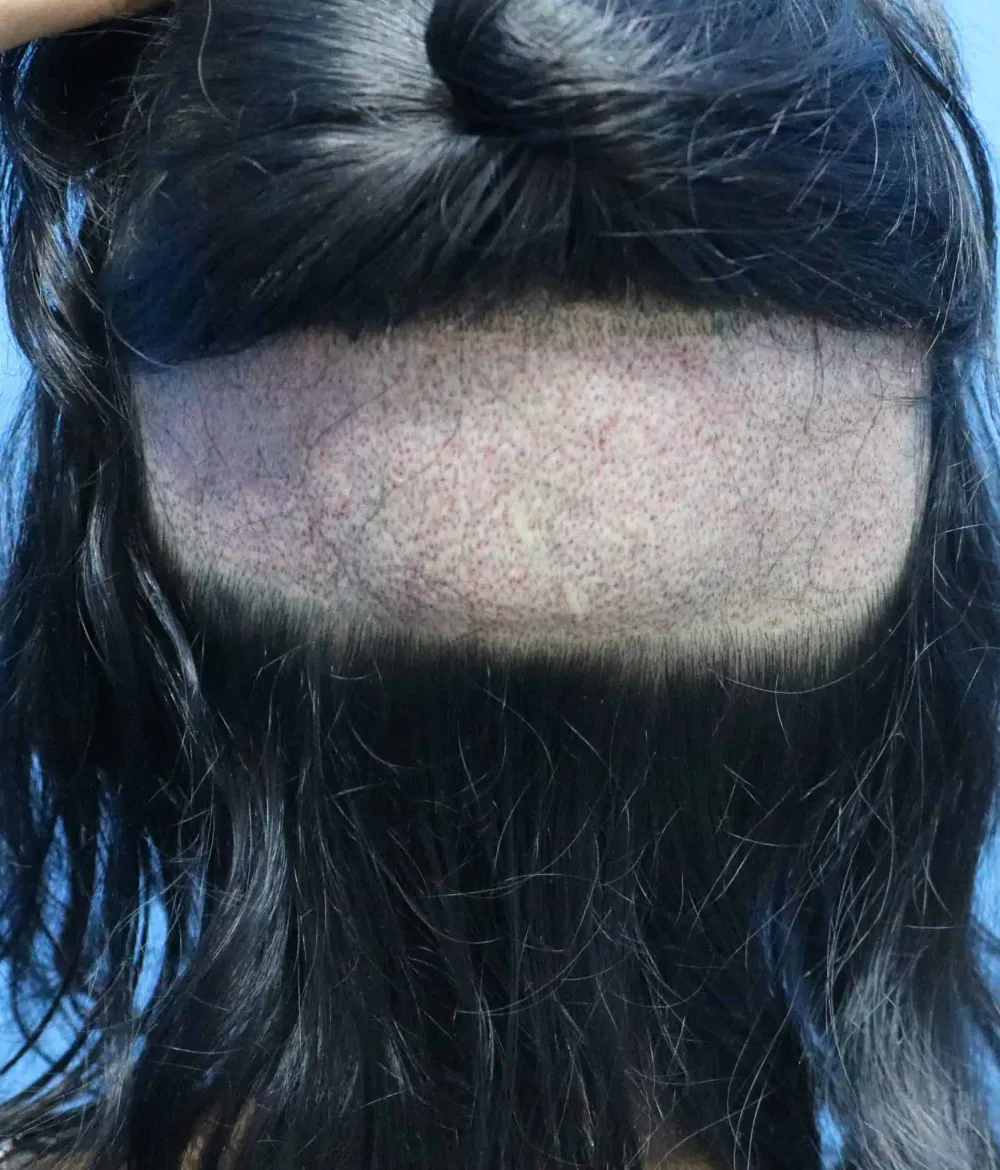
Worried about a shaved patch? For most women there isn't one. If your hair is long enough, we tie up the upper hair and shave only a narrow donor strip underneath.
Once your hair is down, nothing shows, and grafts are placed through your existing hair rather than shaving it.
Wondering if you're a candidate?
The same careful method, adapted for you.
The procedure follows our usual protocol: follicles taken one at a time from the permanent donor area and placed into thinning areas, under local anaesthesia, with you awake and comfortable.
The surgeon plans, designs any hairline, extracts with the team assisting and makes the incisions; the team places the grafts under supervision, or the surgeon implants them with implanter pens. For women we adapt the detail: placing grafts among existing hair, a discreet donor approach, and hairlines and brows designed to female proportions.
See our full method — the Signature 360° Micro FUE™ protocol →
It should just look like your hair.
A natural result means density that blends with your own hair, a hairline at the right height and softness, and brows that follow how brow hair really grows. It should simply look like you, with more hair.
Women we've treated.
What to expect — including the part worth being honest about.
You go home the same day. Mild swelling and small scabs settle within 7–10 days, and with the discreet donor approach most women are comfortable in public within days.
One thing to know: about a month after the procedure, roughly half of women notice shock loss — some existing hair around the area sheds for a few weeks. It is temporary.
The follicles are resting, not lost. New growth begins at three to four months, with the fuller result by about twelve months — and we're with you through every stage.
Start by understanding what's happening with your hair.
You don't have to decide anything yet. Take our 60-second estimate or send a few photos, and we'll give you an honest picture of your options — surgical or not, with complete discretion.