Your hairline, restored the way it grew.
Whether it is a receding hairline, a thinning crown, or loss across the top, the work is the same: careful, surgeon-led restoration designed to look like your own hair — because it is. Performed in Manila, to the international standard for hair restoration.
60 seconds · An estimate based on your hair loss stage · Not a medical diagnosis.

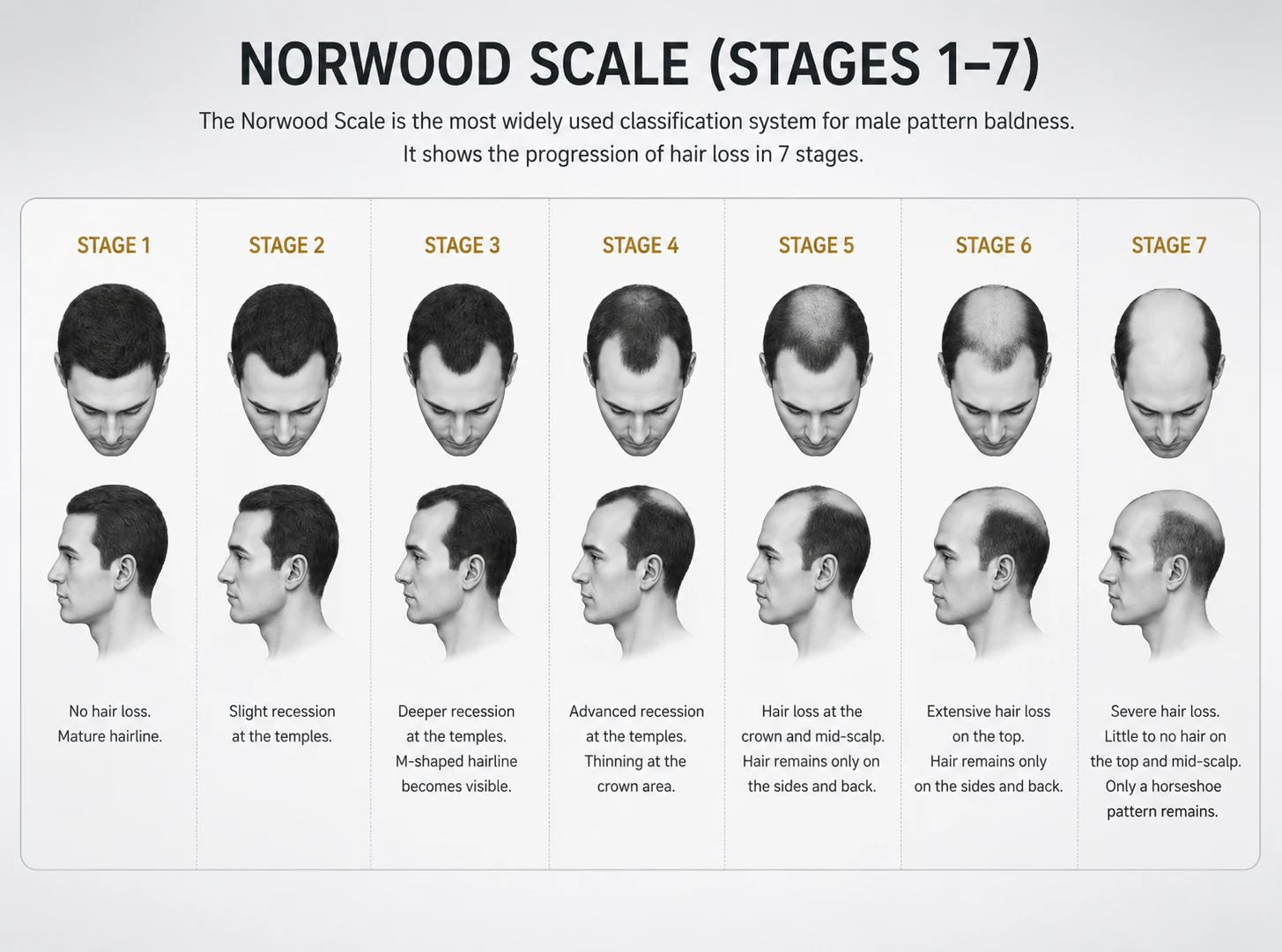
Most male hair loss follows a pattern.
Male pattern hair loss progresses in recognisable stages, mapped by the Norwood scale — from slight temple recession to loss across the top. We treat every stage, but the right plan depends on how far your loss has progressed and how much your donor area can sustainably give.
Earlier stages often need fewer grafts than expected; advanced cases may be staged over more than one session. Either way, the first step is an honest assessment.
The areas we restore.
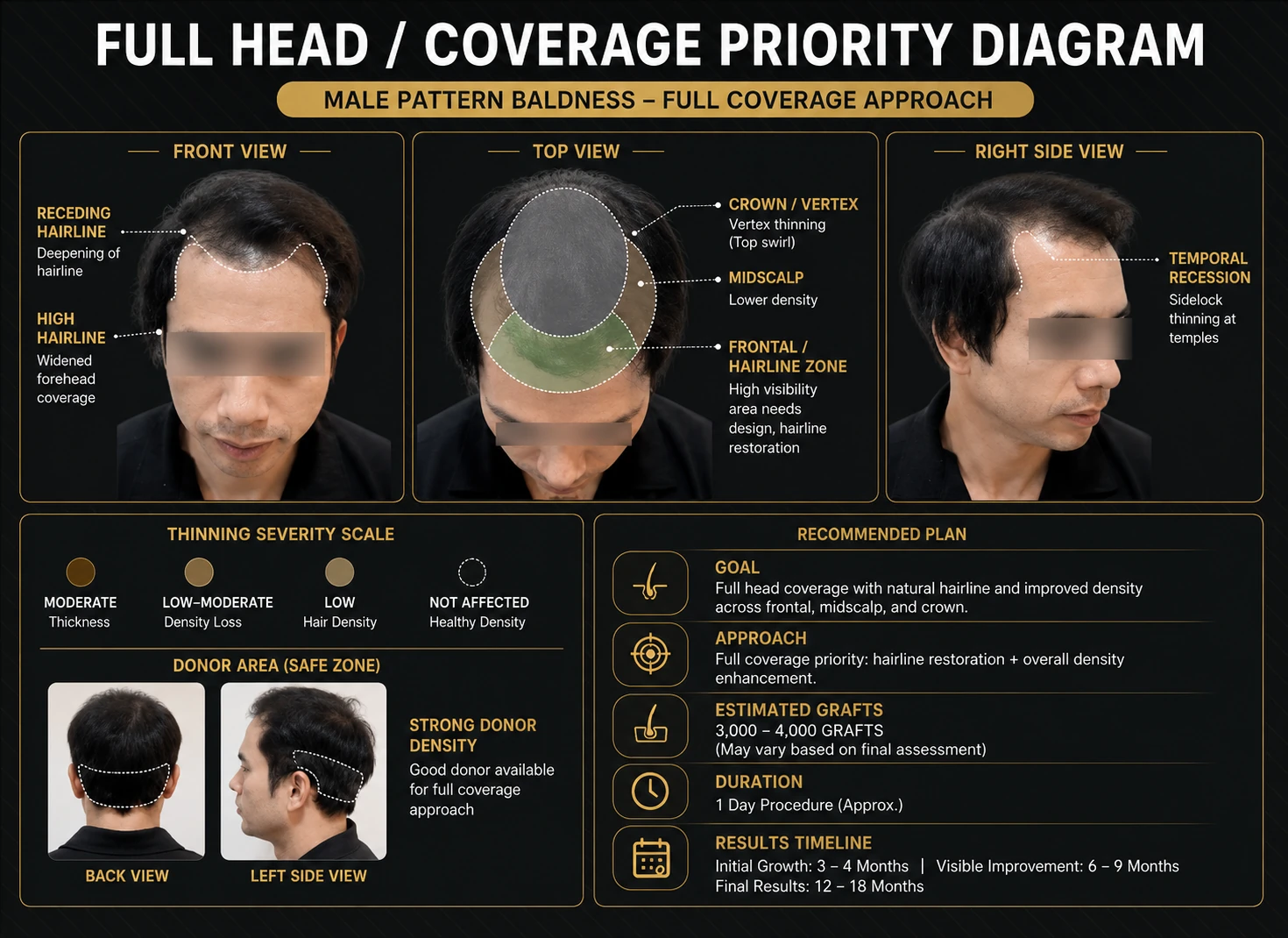
Male pattern hair loss is the most common reason men come to us — a receding front, a thinning crown, or loss across the whole top. When it has progressed, restoring it is a question of planning: we prioritise the areas that frame your face and protect your donor area for the future, often staged across more than one session.
Male pattern baldness follows a recognisable progression — the Norwood pattern — and when loss is extensive, one fact governs every decision: your donor area is finite.
- The donor supply is the limit. There is only so much permanent hair at the back and sides, and its density and caliber are fixed. Once it is harvested it does not regrow. Every plan for extensive loss is built around spending that reserve wisely.
- Coverage, not thin spread. Spreading grafts thinly across the entire head produces a see-through result that satisfies no one, and wastes the donor doing it. The goal is a convincing, natural result in the zones that carry the most visual weight.
- Prioritising the frontal third. In practice this usually means the hairline and the area immediately behind it, because that is what frames the face and what people see first. A strong, natural front with a sensibly managed mid-scalp reads as a full head of hair.
- Staging across sessions. For larger cases we frequently stage the work a year or more apart. Staging protects the donor, lets the first stage mature so the next is planned against a real result, and produces a better long-term outcome than attempting everything at once.
- An honest assessment. We will assess your donor density, scalp laxity and the safe limits of harvesting, and show you what is realistically achievable with the hair you have — and what is not.
A real patient result
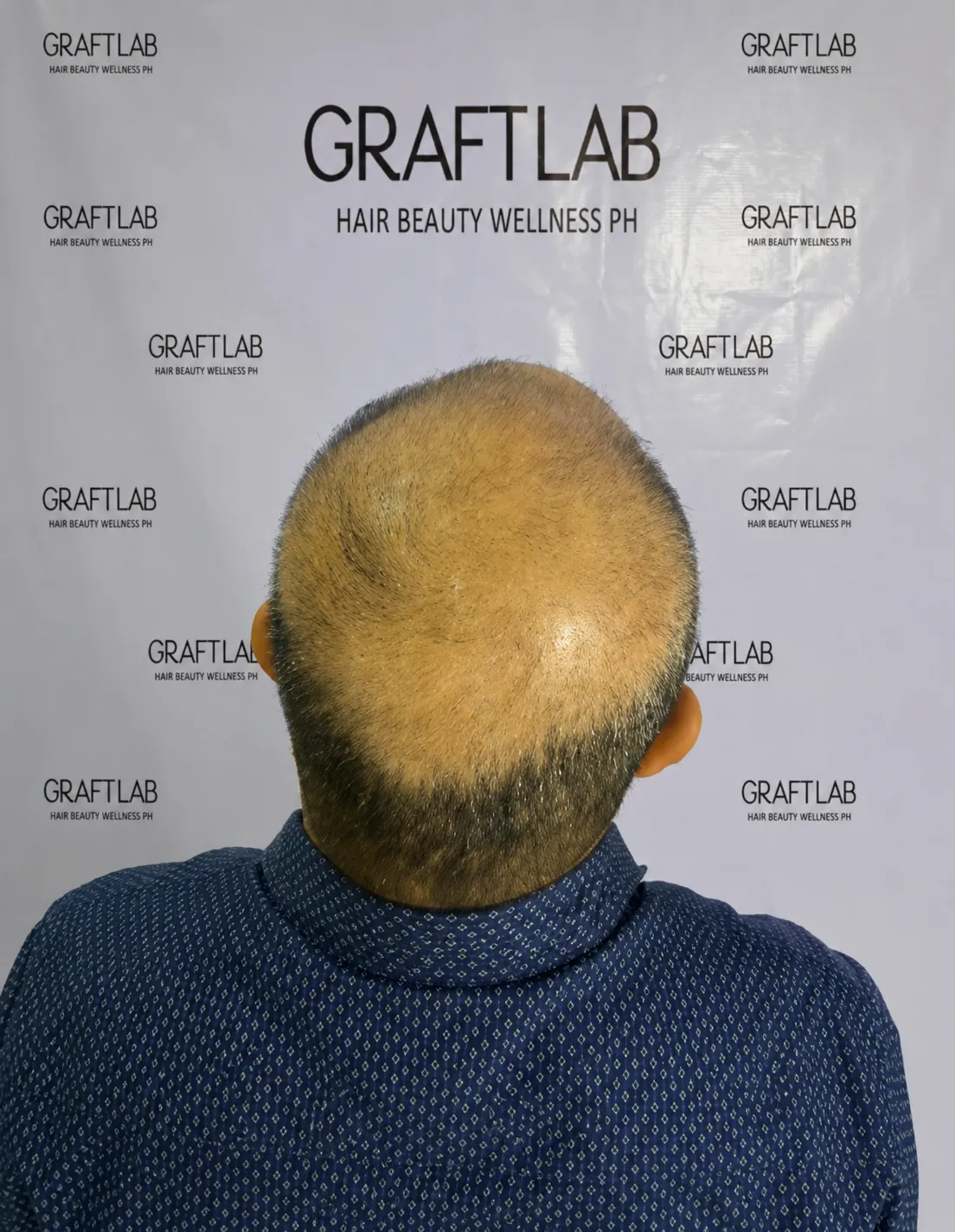
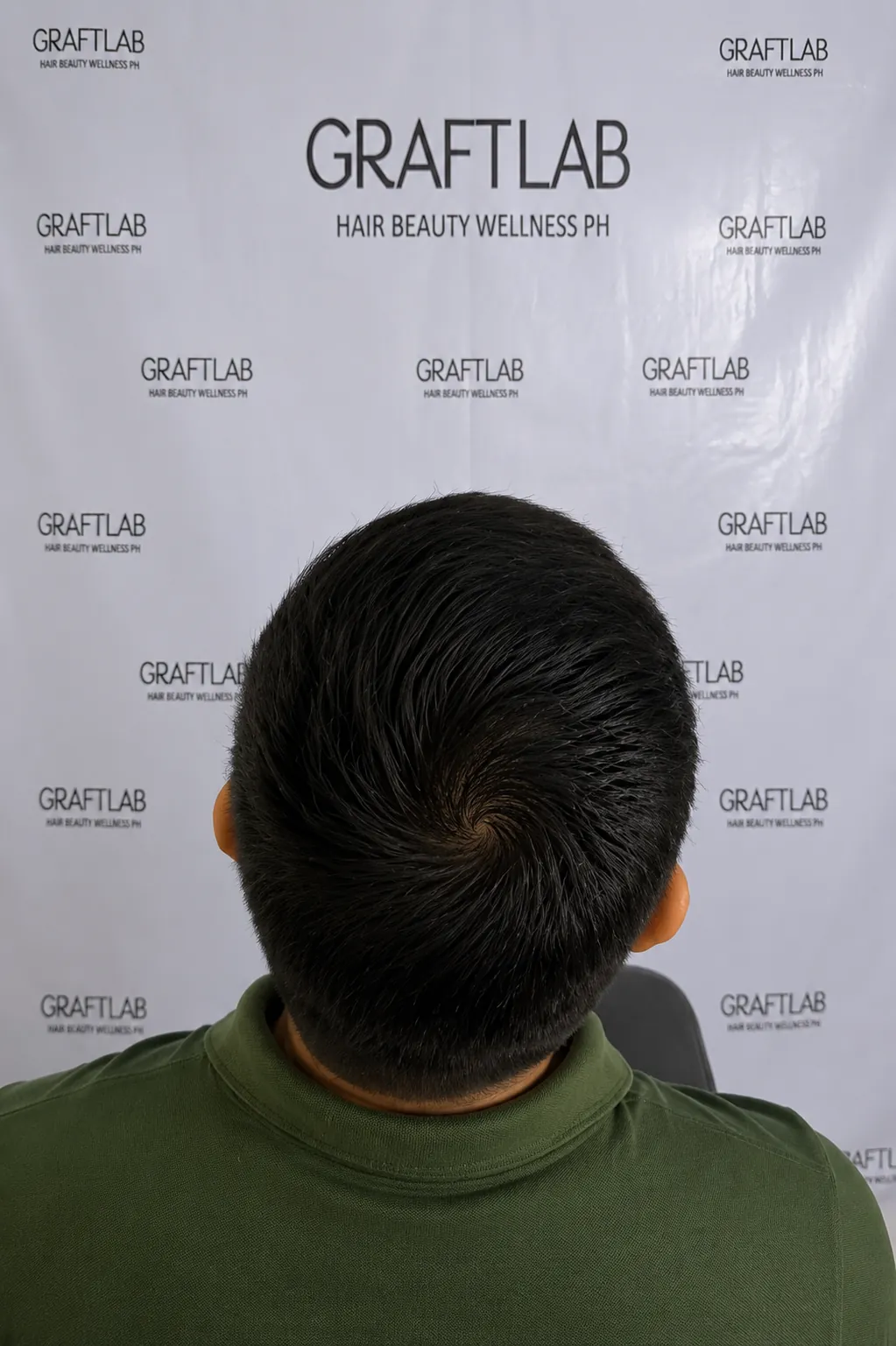
Every full-head restoration is planned and carried out under our Signature 360° Micro FUE™ protocol. See how the method works →
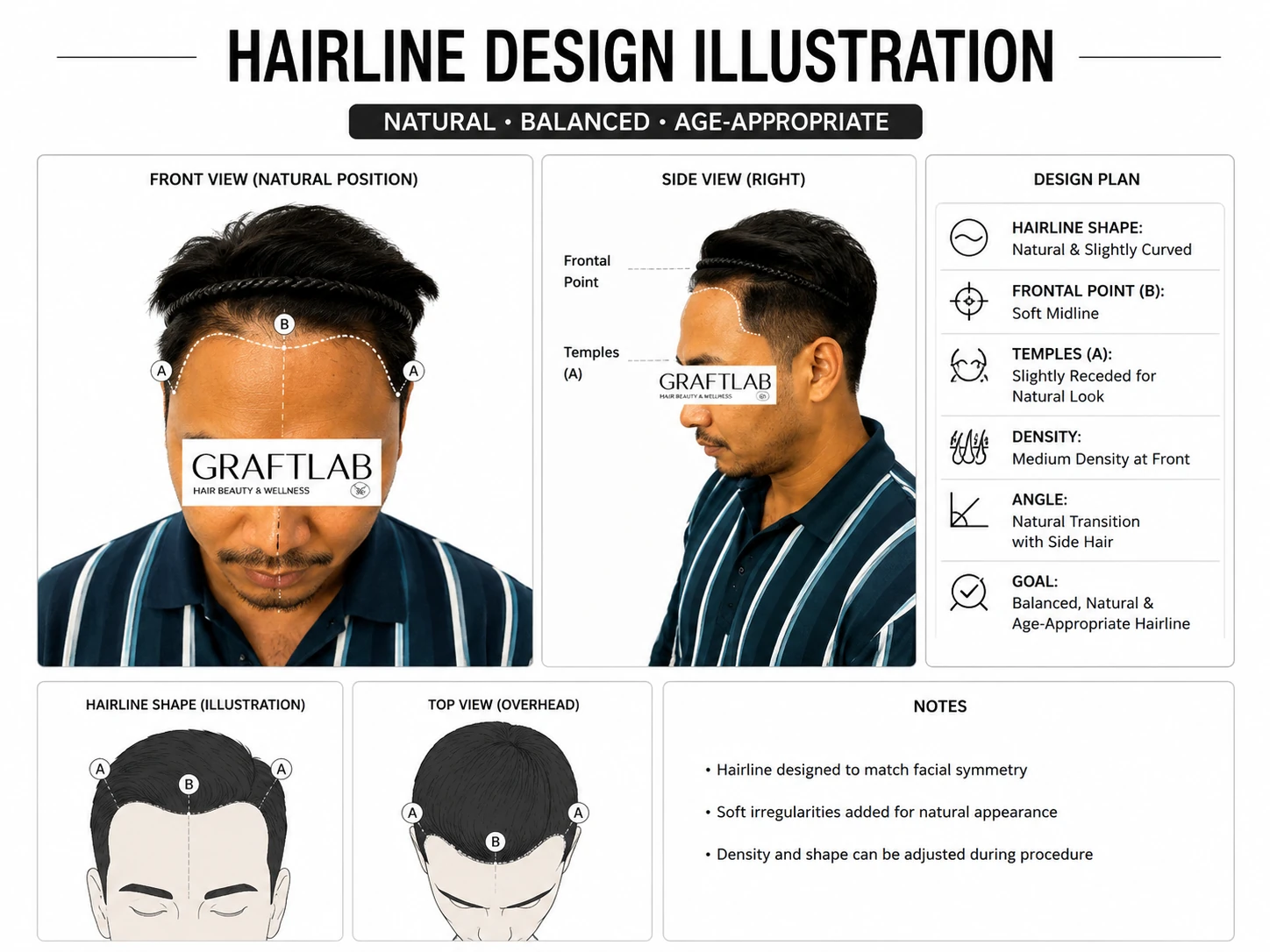
As the hairline recedes it often takes the M-shape many men recognise, with the temples retreating faster than the centre. The hairline frames the face, which makes it the most demanding area to restore — and the one that exposes poor work fastest. A natural hairline is soft and irregular at the front, never a straight, dense wall. Our surgeon designs it and creates the recipient sites by hand, to suit your face and the way your hair grows.
The frontal hairline and the temples are where a transplant is judged. Recession typically begins at the temples and corners, producing the M-shape many men know, so most of the technical care in our work goes here.
- A mature hairline, not a teenage one. Not every higher hairline is hair loss. The hairline naturally matures with age and sits a little higher than it did at twenty. We design a hairline appropriate to your age and face — one that will still look right in twenty years — rather than chasing the line you had as a teenager.
- The transition zone. The leading edge is built from single follicular units, the finest hairs in your donor area, set at low, forward-leaning angles. This soft front row is what lets the hairline fade in gradually instead of starting as an abrupt line.
- Deliberate irregularity. A natural hairline is never a straight, even line. We build in the broad irregularity of a gently undulating edge and the fine irregularity of scattered sentinel hairs set ahead of the main line. A ruler-straight, evenly spaced hairline is the clearest sign of an obvious transplant, and we design specifically to avoid it.
- Density gradient. Behind the transition zone, density increases progressively. The eye reads a hairline as natural when it is light at the very front and builds in fullness behind — not when it is uniformly dense from the first row.
- Temple framing. The frontotemporal angles and temple points — the arms of the M — are shaped to your individual face. Rebuilt too aggressively they look unnatural; left too far back the face stays unframed.
- Designed by the surgeon, placed by hand. The hairline design is the surgeon's work, agreed with you before anything begins and mapped under surgical magnification. The surgeon creates each recipient site at the planned angle, direction and depth; the trained team then places the grafts into those sites by hand, under the surgeon's supervision. When implanter pens are used, the surgeon implants the grafts.
A real patient result
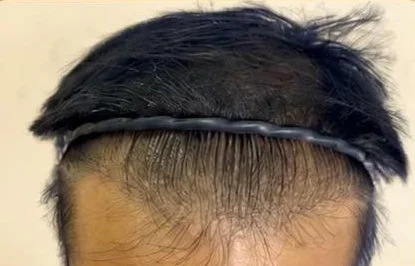
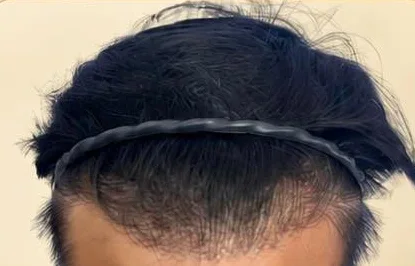
Your hairline is rebuilt under our Signature 360° Micro FUE™ protocol. See how the method works →
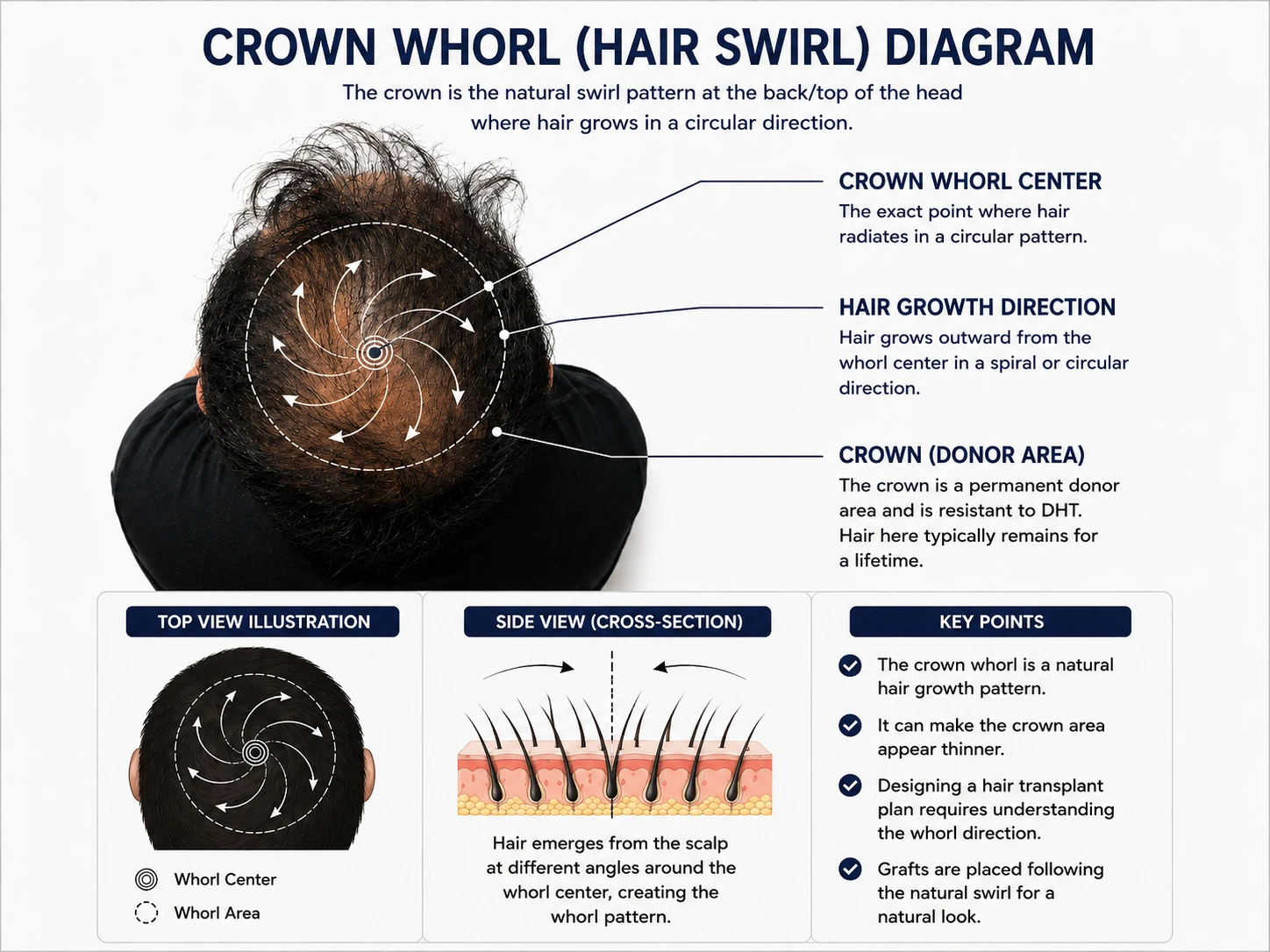
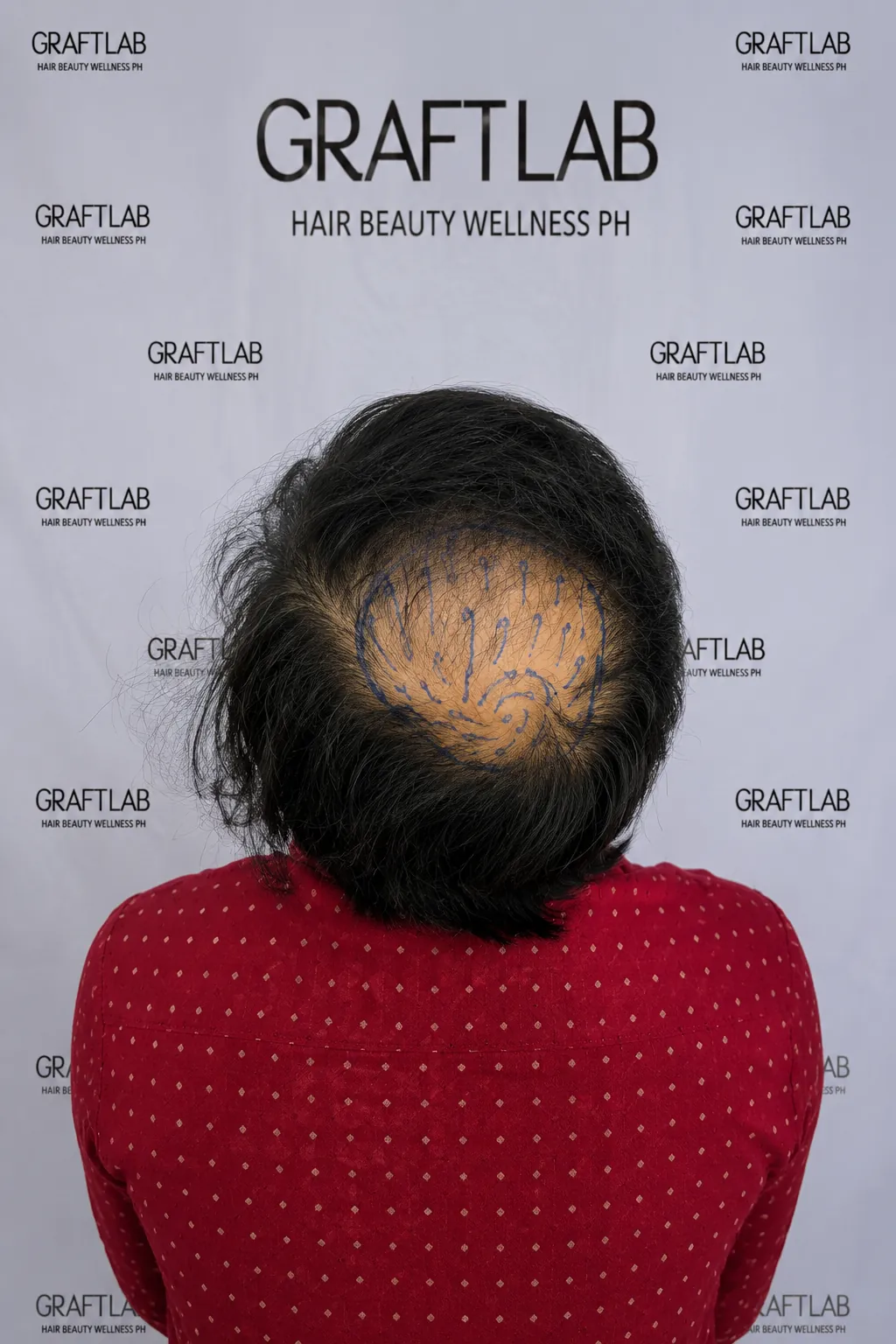
The crown grows in a spiral whorl that has to be recreated precisely for the result to look natural, and it absorbs more grafts than its size suggests. We plan it carefully against your whole donor supply, so restoring the crown does not come at the cost of the front.
The crown looks like a simple circular patch. It is one of the more difficult areas in hair restoration to plan and to execute well.
- The whorl pattern. The crown grows in a spiral that radiates from a central point, and the direction of growth changes continuously around it. Grafts must be angled to follow that swirl. Placed at a single uniform angle they sit flat and read as wrong.
- The graft sink. Because the crown sits on a curved surface and the swirl scatters the eye, it absorbs a disproportionate number of grafts for its apparent size before it begins to look dense. It is easy to spend a large part of a donor supply here for little visible return.
- Sequence and priority. For a man also losing hair at the front, committing heavily to the crown is often the wrong order. The front frames the face and usually returns more for every graft spent. We discuss sequence openly — front first, crown later, or the two staged together.
- Planning for future loss. Crown loss tends to expand outward over time. A dense crown built today can end up ringed by new loss later, leaving an unnatural island. We approach the crown conservatively and often stage it across sessions to plan for the years ahead.
- Honest counsel. Sometimes the right advice is to wait on the crown and protect the donor for the front. If that is the case for you, we will say so.
A real patient result
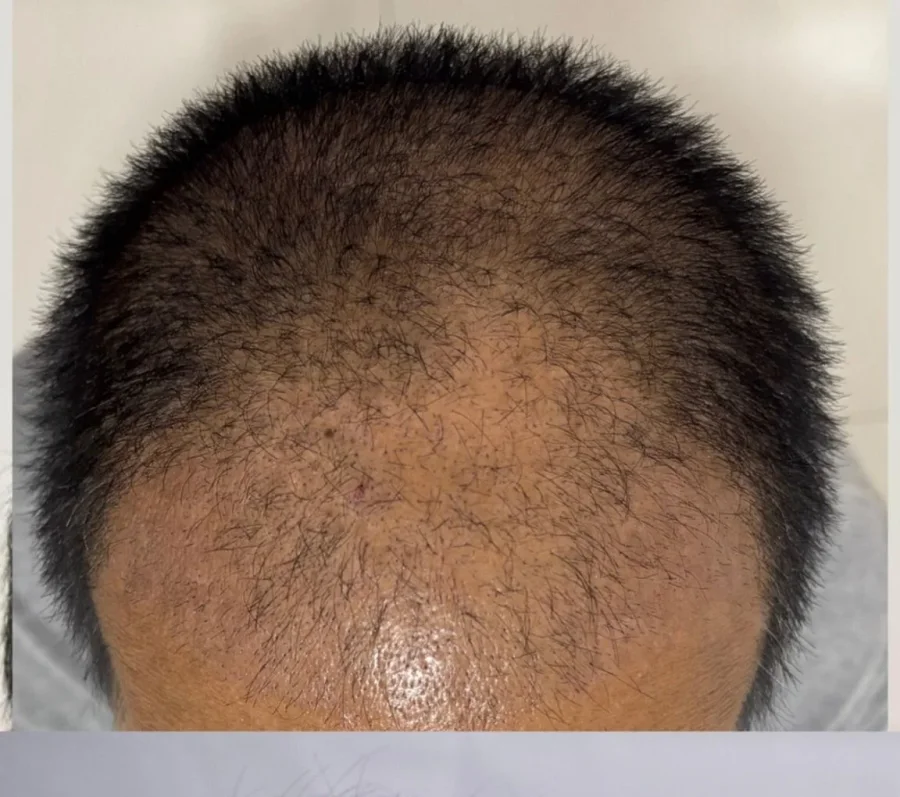
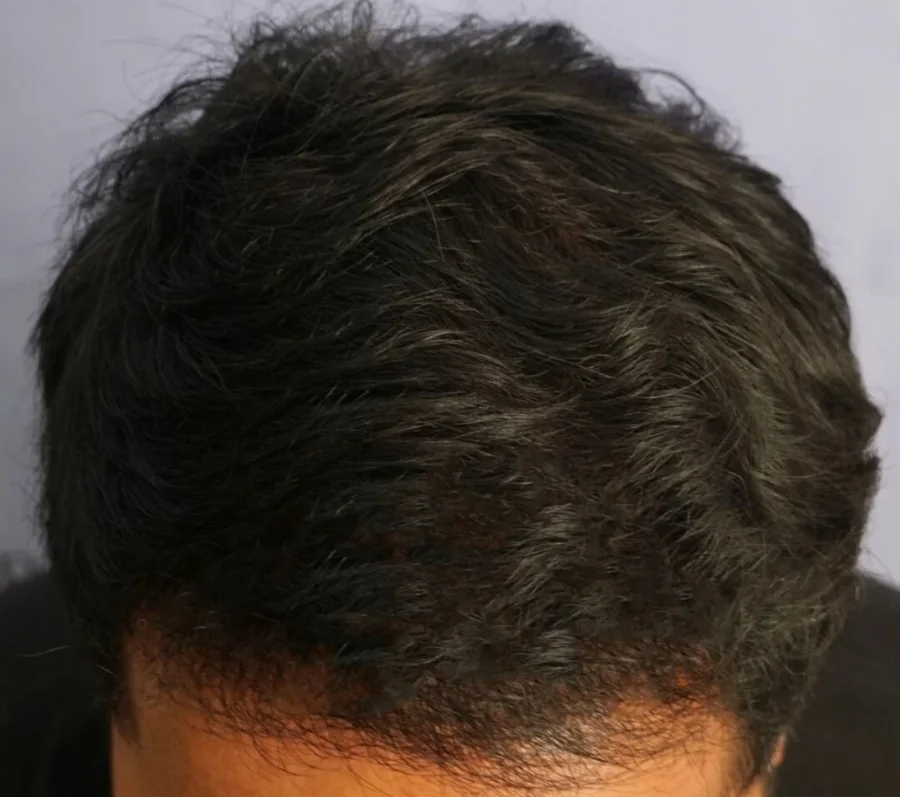
Crown work is performed under the same Signature 360° Micro FUE™ protocol. See how the method works →
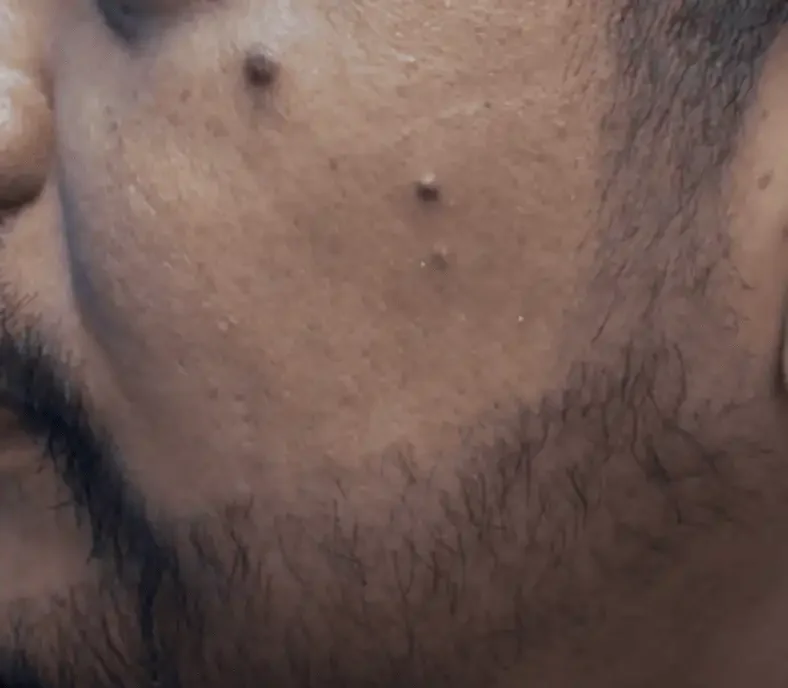
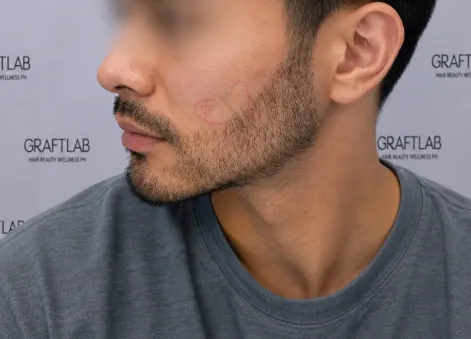
Facial hair can be restored the same way as scalp hair — to fill patchy areas, strengthen a thin beard, or define the moustache, sideburns and jawline. The grafts are placed at the sharp, flat angles facial hair grows at, so the result looks like it belongs to your face.
Beard restoration uses the same principle as a scalp transplant, but the technique is adapted to the face.
- Permanent facial hair from scalp donor. Healthy follicles are taken from the permanent donor area on the scalp and placed into the face. Once they settle they grow permanently and can be shaved, trimmed and groomed like the rest of your facial hair.
- Angle is everything. Facial hair grows at a much sharper, flatter angle than scalp hair — almost hugging the skin — and the direction changes across each region: the moustache, the chin, the jawline, the cheeks, and the sideburns where they meet the hairline. Recreating those angles and directions correctly is what makes the result look grown rather than added.
- The edges are designed like a hairline. The front of the moustache and the outline of the beard receive the same single-hair care as a hairline, because those are the lines the eye reads.
- What it treats. Beard work fills patchy or thin areas, builds a fuller beard where it never grew well, defines edges and sideburns, and camouflages scarring, including acne scars and old injuries.
- Recovery. Healing on the face is generally quick. Tiny crusts form around each graft for the first several days, much as on the scalp, and the transplanted hairs shed before regrowing over the following months.
- An honest view of density. The fullness achievable depends on your donor supply and the look you want. We design it with you first and tell you what is realistic before anything begins.
A real patient result
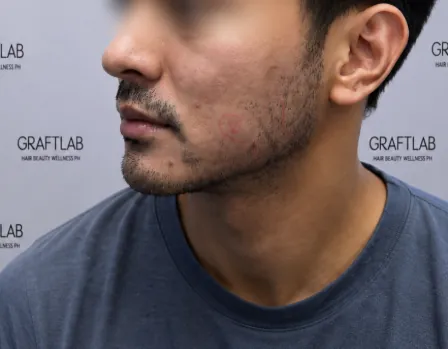
Facial work follows our Signature 360° Micro FUE™ protocol throughout. See how the method works →
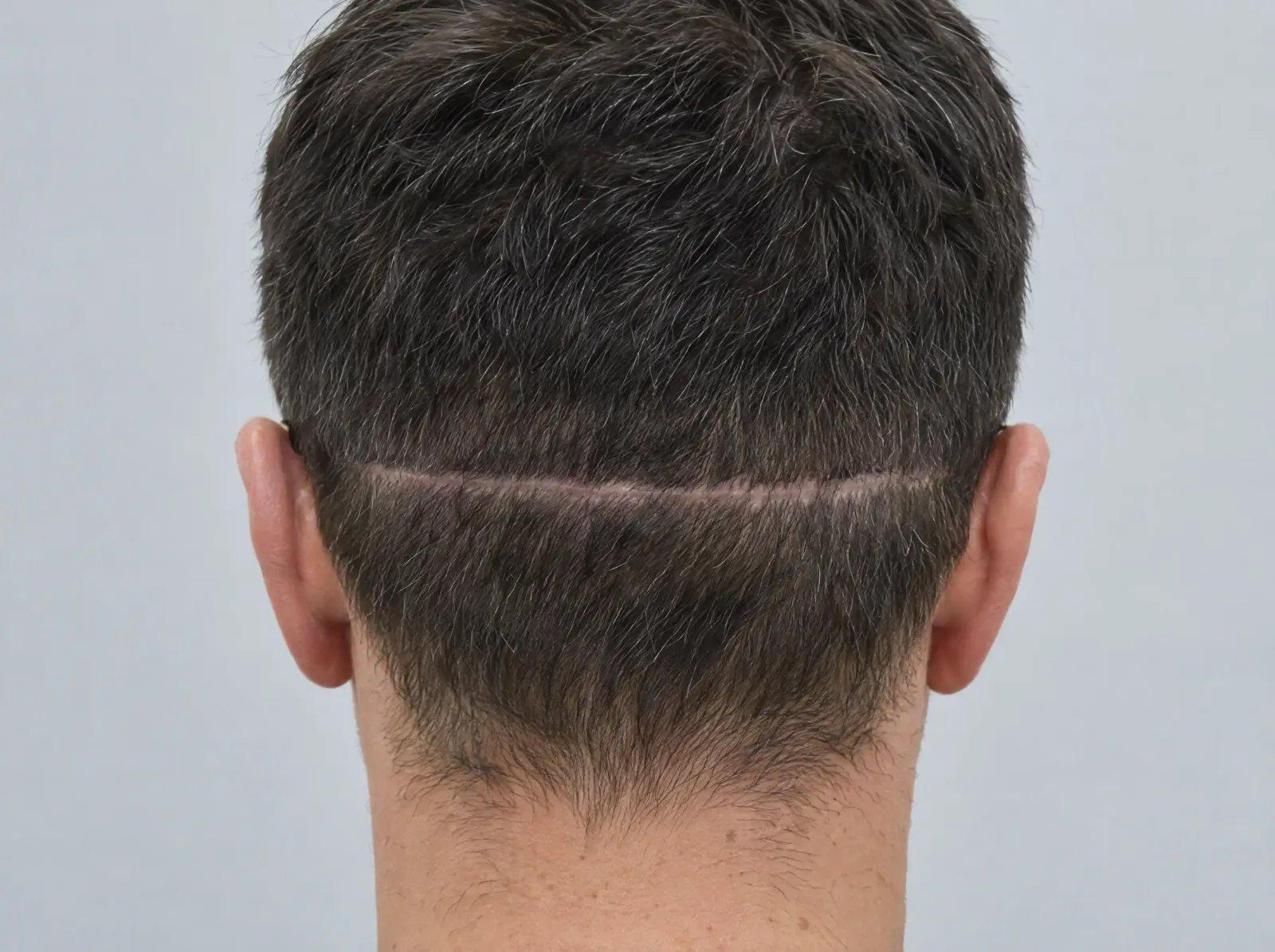
Hair can be transplanted into scars on the scalp — from injury, surgery, or older strip-method (FUT) procedures that left a linear scar — to soften and camouflage them. It is often done alongside a hair transplant, and sometimes on its own.
Scars on the scalp can be camouflaged by transplanting hair directly into and around them.
- What it treats. The most common is the linear scar left by the older strip method (FUT), where a band of scalp was removed. Accident scars, burn scars and surgical scars can be treated the same way.
- The blood-supply consideration. Scar tissue has a poorer blood supply than healthy scalp, and grafts depend on that supply to survive. Graft survival within a scar can therefore be lower than in normal tissue, and the area is best approached with that in mind.
- A conservative, sometimes staged approach. We often work at a lower density on a first pass to confirm how the tissue accepts grafts, sometimes treat in stages, and occasionally condition the tissue beforehand to improve the bed. The angle and depth of each site are adjusted for the altered, often tighter tissue.
- A realistic goal. The aim is to soften and disguise the scar so it is no longer obvious — camouflage rather than complete erasure.
- Combined or alone. Scar work is frequently done at the same time as a hair transplant, and sometimes on its own. Before you decide, we will look at your particular scar and tell you honestly what degree of improvement is achievable.
Scar work is carried out under our Signature 360° Micro FUE™ protocol. See how the method works →
FUE, explained plainly.
We use FUE — follicular unit extraction. Follicles are taken one at a time from the permanent hair at the back and sides of your head and placed where you are thinning, so they keep growing for life. You are awake and comfortable under local anaesthesia.
It can be done fully or partly shaven, with the donor area trimmed discreetly. Most men are comfortable in a cap the next day.
See our full method — the Signature 360° Micro FUE™ protocol →
What happens, step by step.
- 01
Consultation & Plan
The surgeon examines your hair loss, checks the health of your scalp, and assesses your donor supply. Your hairline is designed to suit your face, and a sensible graft number is set for your case. You will understand the plan, the timeline, and the cost before anything begins.

- 02
Preparation
The area is shaved or trimmed as your plan requires, and the donor area is prepared. Local anaesthesia is administered so both the donor and recipient areas are fully numb and you are comfortable.

- 03
Extraction
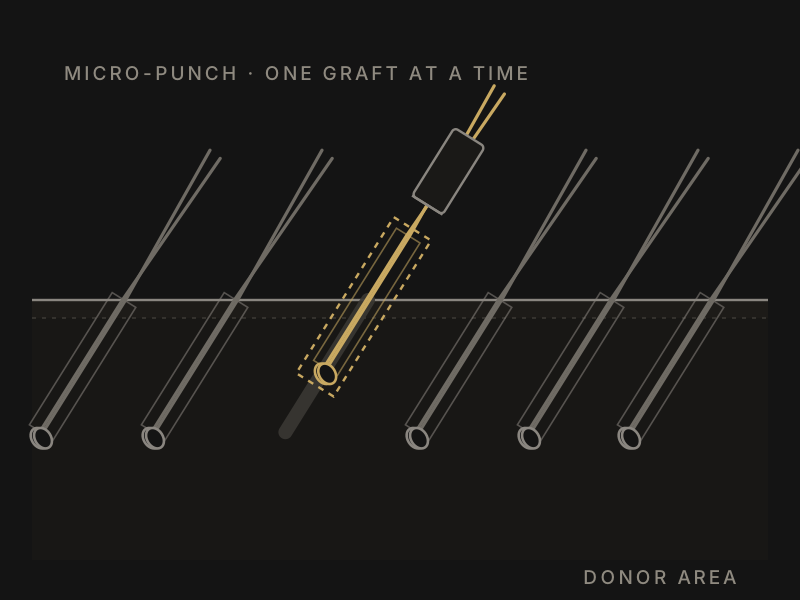
The surgeon, assisted by the team, extracts individual follicles from the donor area using a micro-punch chosen to suit your hair, minimising trauma to each graft and the surrounding skin. The trained team receives the grafts and keeps them in a protective solution to keep them alive.
- 04
Recipient Sites
The surgeon creates the tiny incisions that will hold each graft — setting the angle, direction and spacing that determine how natural the result looks. This is the surgeon's work, and where the artistry of a hairline lives.

- 05
Placement
Each graft is placed into its site at the correct angle and depth, following the surgeon's design, to build even, natural-looking coverage. This is the patient, hours-long work the trained team performs under the surgeon's supervision.

- 06
Post-Procedure Care
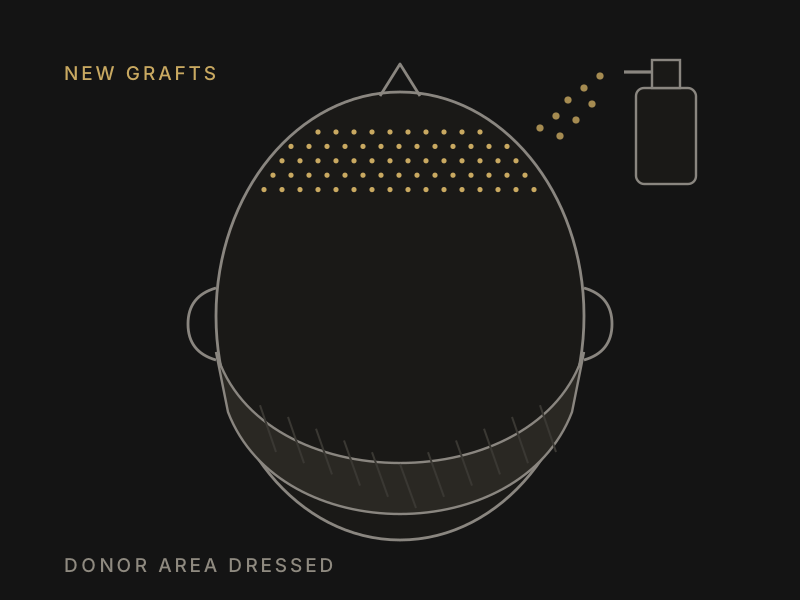
Your scalp is bandaged, and you are shown how to wash and care for it, given any medication you need, and briefed on what to expect. The team handles your aftercare, with the clinic available to you throughout recovery.
- 07
Recovery & Regrowth
Initial recovery takes about a week. The transplanted hair sheds within the first weeks — this is normal and expected. New growth begins around three to four months, with the fuller result visible by about twelve months.
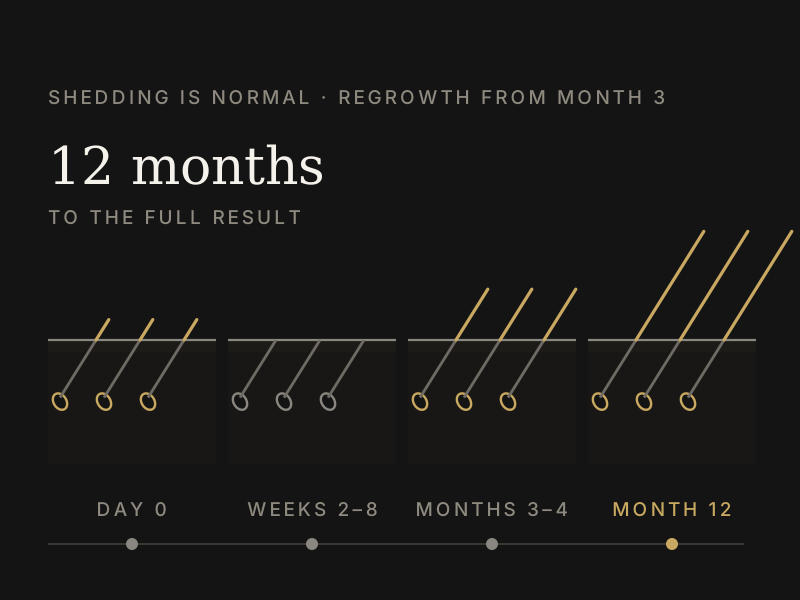
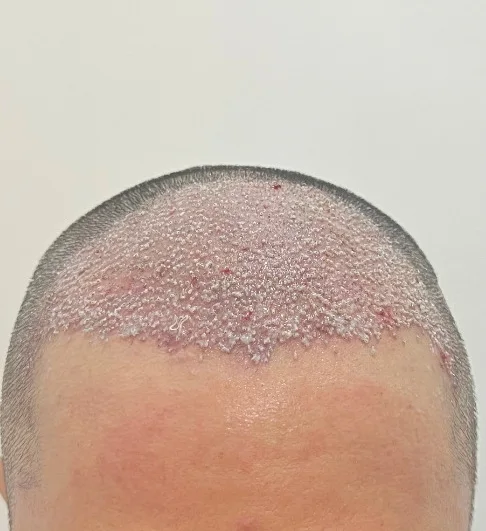
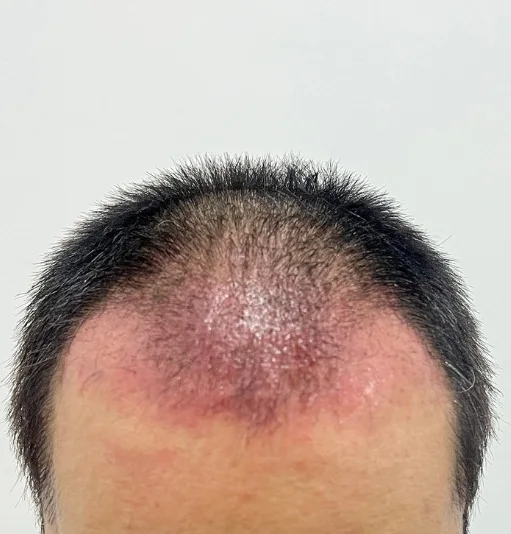
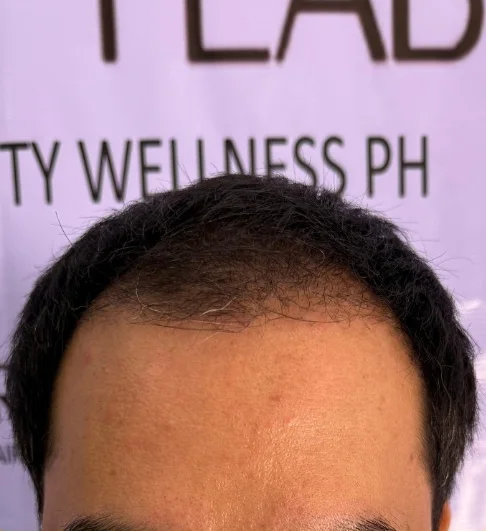
Recovery, stage by stage
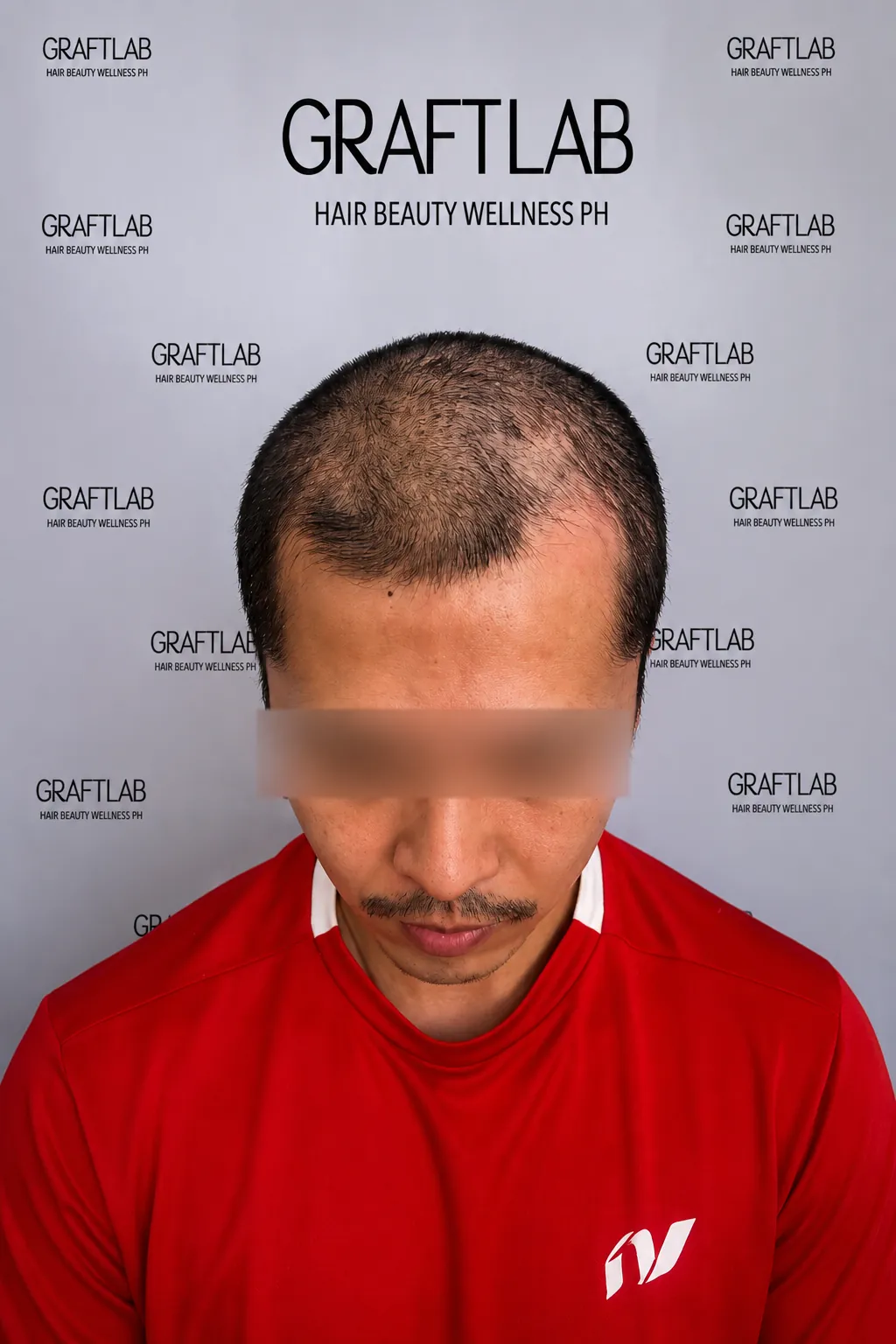
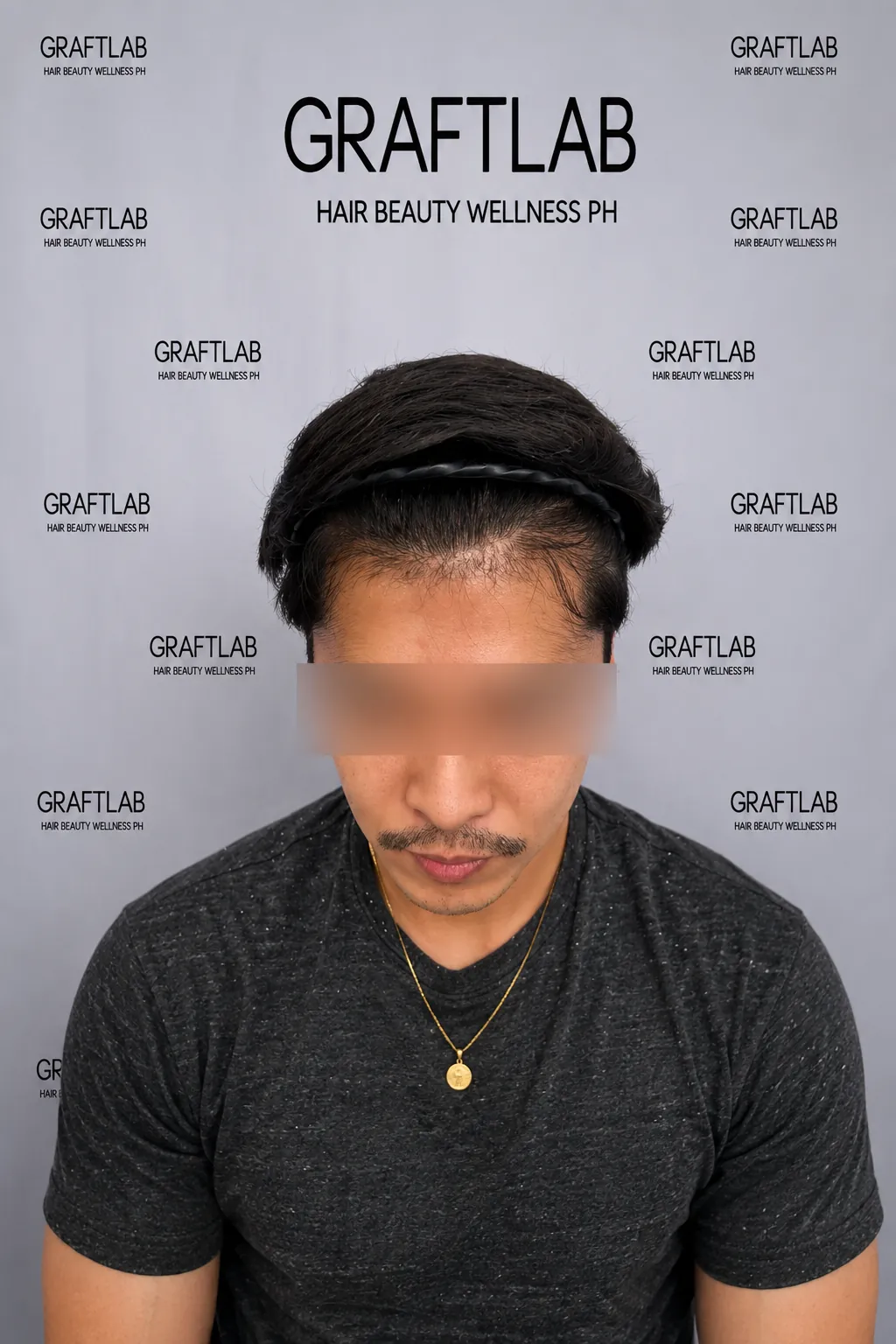
Real GraftLab Manila patients at each stage. The new hairs shed in the first weeks — that is normal — and regrow from around month three.
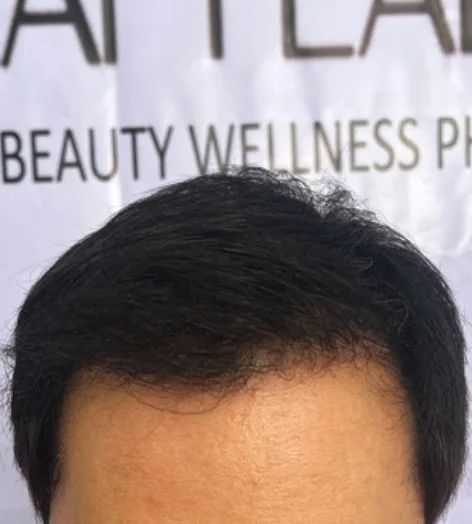
No one should be able to tell.
Most men don't fear the surgery — they fear an obvious, evenly spaced hairline. A natural hairline is irregular: soft and fine at the front, denser behind, with hairs at their natural angles. The surgeon designs it and creates each site by hand. Done properly, people only notice you look like yourself.
Men we've treated.
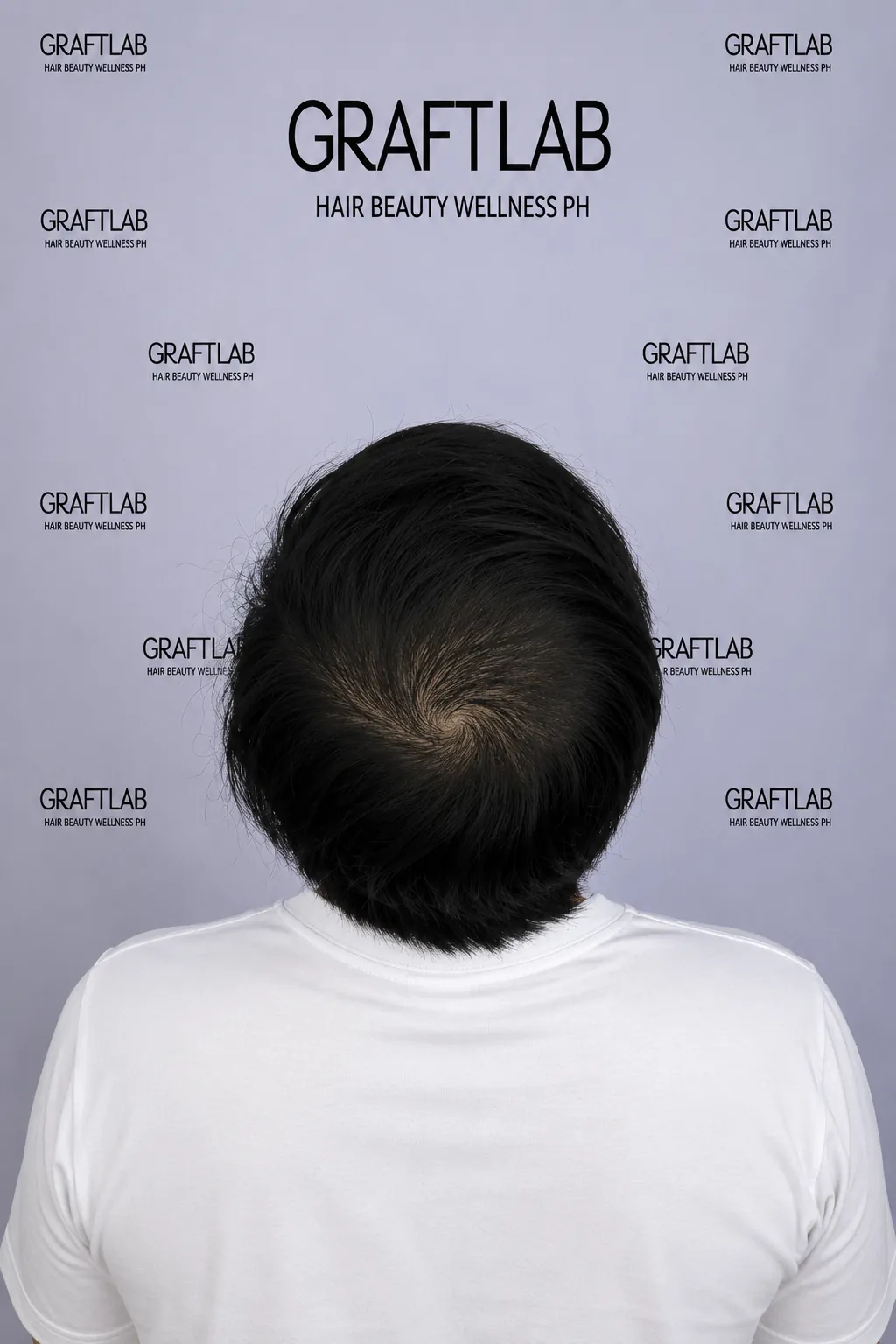
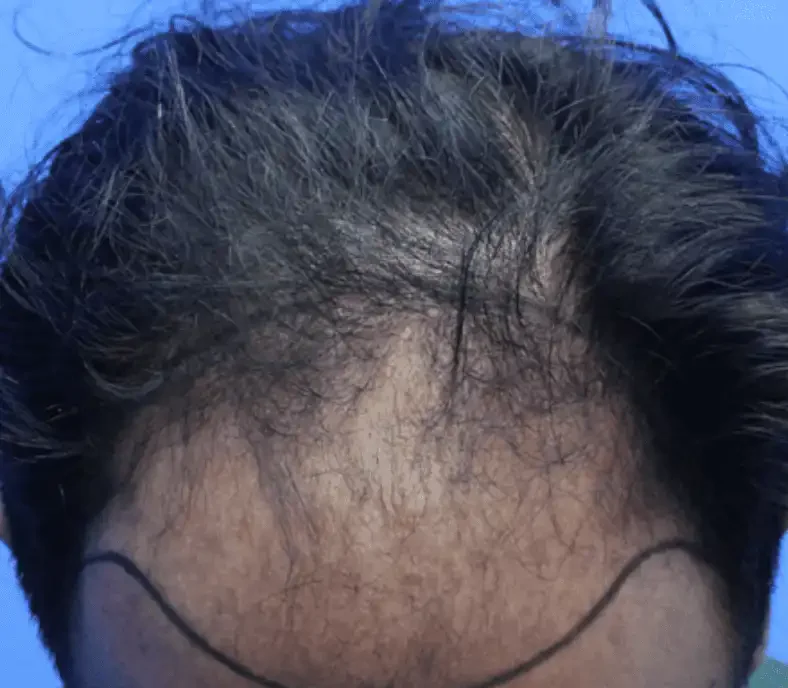
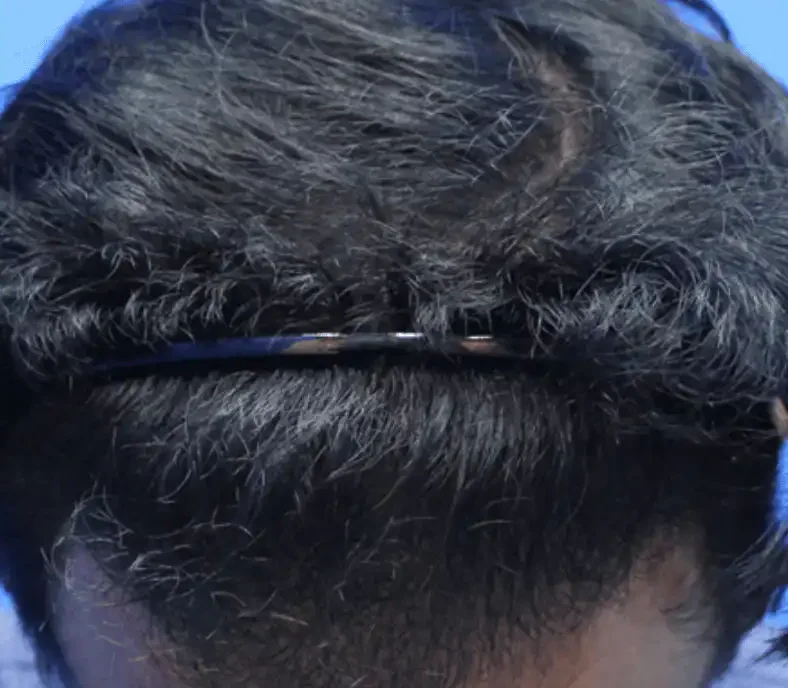
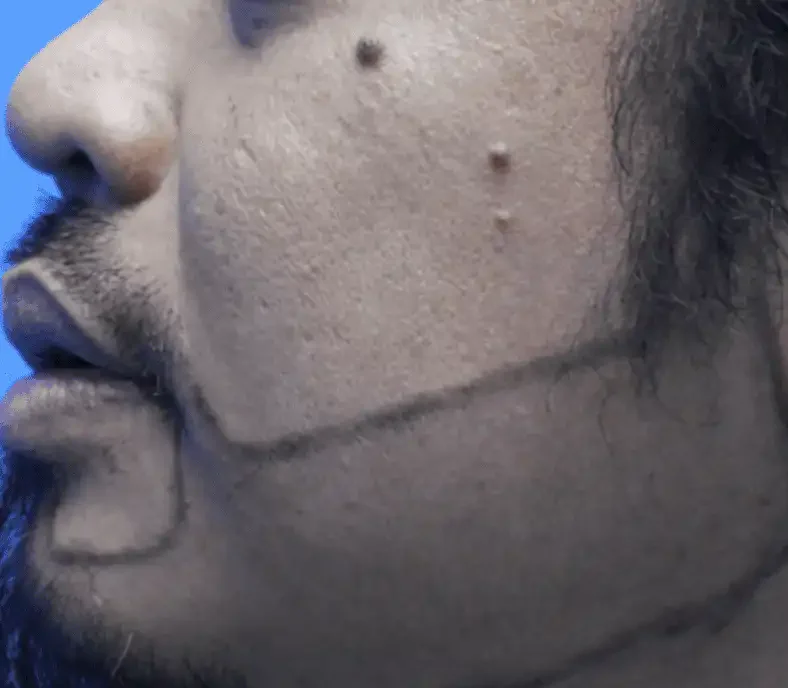
What recovery actually looks like.
You go home the same day. Mild swelling and scabbing settle within 7–10 days, and most men are back to normal within a week (no strenuous exercise or swimming for two weeks).
The transplanted hair sheds in the first weeks — that's normal. New growth starts at three to four months, with the full result by about twelve months.
Start by understanding your own case.
The honest first step is to find out what your hair actually needs. Take the 60-second graft estimate, or message us for a personalised assessment — no obligation, no pressure.